Your Trusted Handyman Service Provider in Singapore!

Category Archives: Handyman Drilling Singapore

tv-installation-services-a1-handyman-singapore-commercial-tampines-7

How Does a Handyman Drilling Service Provider in Singapore Choose the Right Anchors and Fixings?

Choosing the right anchors and fixings is one of the most important parts of a safe and neat drilling job in Singapore. Whether the task is wall mounting, curtain installation, grab bar fitting, shelving, or bracket installation, the fixing must suit both the wall material and the item being installed. A good handyman drilling service provider does not simply drill a hole and insert a plug at random; the choice depends on the wall type, the weight and shape of the item, the expected movement, and how the surface will be used over time.

Why anchors and fixings matter in drilling work

Anchors and fixings are the connection between the wall and the item being mounted. If the fixing is unsuitable, the item may loosen, lean, crack the surface, or fall. In a Singapore home or office, this matters especially for items used daily, such as mirrors, shelves, curtain rods, toilet accessories, TV brackets and safety bars.

The right choice helps the installation look tidy and perform properly. It also reduces the chance of unnecessary damage to tiles, plasterboard, concrete, brick or other wall finishes. For a handyman, the goal is not just to complete the drilling, but to match the fixing method to the actual surface and the intended use.

Start with the wall material, not the item alone

Before selecting an anchor, a handyman drilling service provider will usually assess what the wall is made of. A solid concrete wall behaves very differently from tiled masonry, hollow partitions, or plasterboard. Some fixings are designed to expand in solid substrates, while others are made to grip from behind in hollow walls.

In Singapore, many homes and offices have a mix of surfaces. A bathroom may have tiles over a solid backing, while a partition wall in a study or office may be hollow. The same screw or wall plug may not suit both. Proper identification of the substrate is therefore the first step in choosing a safe and appropriate fixing.

Where tiles are involved, care is also needed to avoid cracking or slipping during drilling. The handyman may choose a fixing system that suits the tile and the base material beneath it, rather than relying on the tile surface alone.

Match the fixing to the weight and use of the installation

Different items place different demands on the wall. A light picture frame, for example, does not require the same type of anchor as a large TV bracket, pull-out shelf, or bathroom grab bar. The bigger issue is not only weight, but also how the item is used. A shelf that holds ornaments is different from one carrying books or kitchen items.

A knowledgeable handyman will consider whether the load is mostly static or whether it may be pulled, twisted or adjusted during use. Curtain rods, for instance, are repeatedly opened and closed, so the fixings need to cope with daily movement. Grab bars and similar fittings also deserve extra care because they are used for support.

Because actual load capacity depends on many factors, including the wall condition and the full installation method, it is better to avoid guesswork. A suitable anchor should be selected based on the actual task and surface, not just on the size of the screw.

Common anchor and fixing types used in Singapore drilling jobs

In general handyman drilling work, common options may include plastic wall plugs, masonry screws, expansion anchors, toggle-style fixings for hollow walls, and other purpose-made fasteners. Each type works in a different way, and each is suited to a different surface and task.

Plastic wall plugs are often used for lighter applications in solid materials when paired with the correct screw. Expansion-style anchors are generally chosen where a firmer grip is needed in solid substrates. Hollow-wall fixings are different again, because they are designed to spread load across the back of the wall rather than relying on a solid mass behind the hole.

A provider should not simply use the same fixing for every job. For example, a curtain bracket, a wall-mounted cabinet and a bathroom accessory may all require different fasteners even if the drilling looks similar from the outside.

How a handyman checks suitability before drilling

A careful drilling service usually begins with a visual assessment of the location, followed by measurement and marking. The handyman will look at the wall surface, nearby edges, existing holes, pipes, cables, fittings and the proposed position of the item. This helps reduce the risk of damage and improves alignment.

If the item comes with manufacturer-provided brackets or instructions, those details should be checked against the wall condition. However, the wall itself still determines what is practical. A fixing may look suitable on paper but still be inappropriate if the substrate is weak, hollow, uneven or already patched.

For Singapore properties, it is also common to consider the final appearance. A neat installation usually requires the right drill bit, correct hole size, proper spacing and tidy finishing so that the mounted item sits level and secure.

Special considerations for bathrooms, kitchens and other busy areas

Bathrooms and kitchens often require extra thought because of moisture, tiles and frequent use. In these areas, the handyman must be careful with drilling position and fixing choice so that the installation is stable and the surrounding surface is not damaged unnecessarily. Tiled walls, in particular, may need a more measured approach during drilling.

For fittings such as towel bars, toilet accessories, grab bars or shelves, the fixing must suit both the wall and the everyday use of the item. If an item may be exposed to steam, splash or repeated handling, the hardware should be selected with durability in mind. Corrosion resistance and good installation practice are both important.

In kitchens or service areas, brackets and shelves may also be exposed to heat, moisture or more frequent loading. The correct fixing helps maintain a safer and more reliable installation over time.

When a different specialist may be needed

Not every drilling-related task is purely a handyman matter. If the work involves concealed electrical wiring, plumbing lines, structural concerns, or regulated building alterations, the provider should take care not to proceed blindly. The safe choice may be to stop, inspect further, or refer the work to the appropriate qualified person.

This is particularly important where holes are needed near switches, sockets, water points, service ducts or known utility routes. A responsible handyman drilling service provider should avoid assumptions and should not drill into areas where hidden services may be present.

Good judgment matters just as much as the anchor itself. The right fixing cannot compensate for drilling in the wrong place.

If you need help with drilling, wall mounting or choosing suitable anchors and fixings in Singapore, WhatsApp A1 Handyman Singapore with clear photos of the fixture and wall, your property type, approximate measurements if relevant, and the exact job scope so a quotation can be based on the actual work required.

Conclusion

Choosing the right anchors and fixings is a practical process that depends on wall material, item weight, daily use and the surrounding conditions. A reliable handyman drilling service provider in Singapore will assess the surface first, match the fastener to the task, and drill with care so the installation is both neat and appropriate for the space. For safe, well-matched drilling work, the key is careful selection rather than using a one-size-fits-all fixing.

Choose A1 Handyman Singapore

A1 Handyman Singapore provides outstanding handyman services in Singapore. We offer plumbing, electrical, aircon servicing, rubbish chute services, water heater services, door repair services, and provide drilling services for wall mounting installations, TV bracket installation services, and pull up bar installation. Need help figuring out a specific issue? Read through our handyman articles and browse our past handyman projects. For reliable handyman services, contact us now through WhatsApp at +65 8241 0032!

Frequently Asked Questions

How does a handyman know which anchor to use?

The choice usually depends on the wall material, the weight of the item, and how the item will be used. A solid concrete or masonry wall may suit one type of fixing, while a hollow partition may need a different system altogether.

Can the same fixing be used for curtain rods and TV brackets?

Not usually. Curtain rods and TV brackets place different kinds of stress on the wall. A TV bracket often needs a more carefully selected fixing because of the weight and the way the load is held away from the wall.

Why is drilling into tiled walls more delicate?

Tiled walls can crack or chip if drilling is done carelessly. The handyman must choose the right bit, drilling method and fixing type so that the tile surface and the backing material are both taken into account.
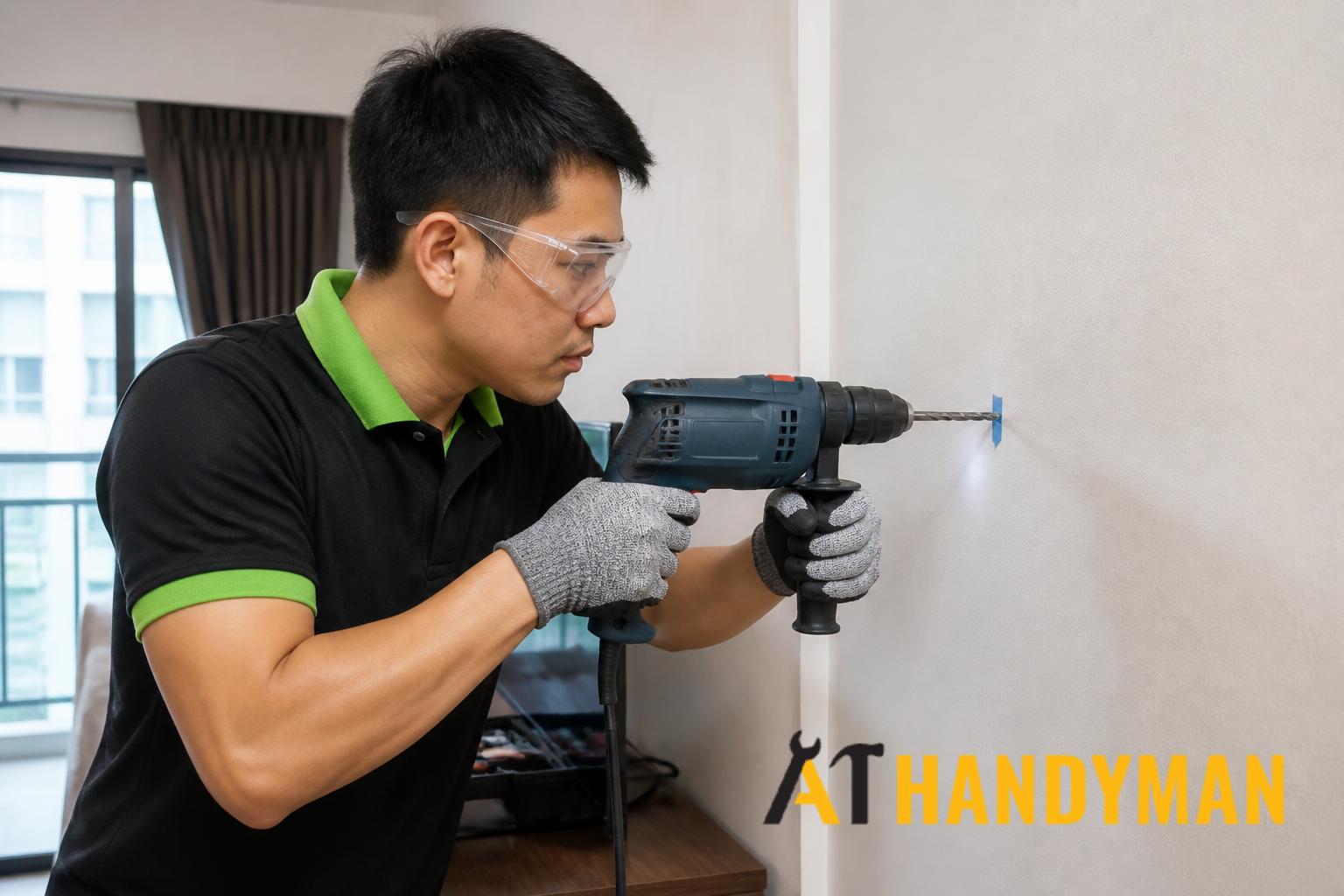
How Is Handyman Drilling in Singapore Carried Out on Concrete, Brick and Partition Walls? by A1 Handyman Singapore

How Is Handyman Drilling in Singapore Carried Out on Concrete, Brick and Partition Walls?

Handyman drilling in Singapore is not simply a matter of making a hole in a wall. The wall material, the fixing required, the surrounding surface finish and the property type all affect how the job is carried out. A concrete wall, a brick wall and a partition wall each behave differently when drilled, so the method, tools and care taken must match the wall type and the item being installed.

For homeowners, tenants, landlords and office users, the main concern is usually whether the drilling is suitable for the wall, the fixture and the intended use. Whether you are planning to mount a shelf, install a curtain rail, hang a mirror or secure a bracket, the drilling approach should be appropriate for the wall structure and the finish around it. In Singapore, that is especially important in HDB flats, condominiums and offices where wall construction can vary from room to room.

Understanding the Wall Type Before Drilling

The first step in handyman drilling is identifying the wall material. Concrete walls are generally dense and require more effort and the right drill bit to penetrate cleanly. Brick walls may be harder or more brittle depending on the wall construction, and drilling must be done carefully to reduce crumbling or uneven holes. Partition walls are usually lighter in construction and may not be suitable for heavier fixings without the correct support or fastening method.

This identification matters because the wrong approach can damage the wall surface, create an oversized hole or leave the fixing unstable. A professional handyman will usually assess whether the wall is solid, hollow or a mixture of layers before proceeding. In Singapore homes and offices, this check is particularly useful where decorative finishes, paintwork or tiled surfaces need to be preserved.

How Drilling Is Carried Out on Concrete Walls

Concrete walls are commonly found in many Singapore properties and are usually drilled with equipment suitable for dense surfaces. The work often begins with marking the drilling points accurately, checking alignment and confirming that the chosen position suits the fixture. A suitable masonry bit and controlled pressure are then used so the hole is formed steadily rather than forced through the surface.

Concrete drilling needs care because the surface is hard and can produce dust and vibration. The handyman must also avoid drilling in places that are unsuitable for the intended installation, such as where other hidden elements may be present. For fittings like TV brackets, grab bars, curtain supports or shelving, the drilling pattern should match the fixing design rather than being placed arbitrarily on the wall.

How Drilling Is Carried Out on Brick Walls

Brick walls require a different approach because the wall may be more susceptible to cracking, chipping or surface wear if handled roughly. Before drilling, the area is usually measured and marked carefully to ensure the hole is placed in a sound section of the wall. The drill speed and pressure should be controlled so the brick face is not damaged unnecessarily.

Depending on the brick condition and the finish over it, a handyman may need to work more cautiously around joints or edges. This is important for curtain rail installation, wall mounting and other fixings that need neat alignment. Brick walls can also vary significantly in quality, so the drilling method should be adapted to the actual wall condition rather than assumed from appearance alone.

How Drilling Is Carried Out on Partition Walls

Partition walls are commonly used in modern Singapore interiors for room division, office layouts or lightweight internal structures. They are not the same as solid concrete or brick walls, so drilling them requires extra care. A partition wall may be hollow, thinner or built with boards over a frame, which means the fixing method must suit the wall’s internal structure.

For lighter fixtures, a handyman may be able to use suitable fixings that hold well in a partition wall. For heavier items, the wall may need a different solution or may simply not be suitable without another support method. This is why it is important not to assume that a wall can carry weight just because it looks firm on the surface. The safest approach is to assess the wall type first and match the drilling and fixing method to the job.

Common Fixtures Installed Through Handyman Drilling

In Singapore homes and offices, drilling is often needed for practical installations rather than decorative purposes. Common examples include curtain rails, shelves, wall hooks, mirrors, framed pictures, small storage fittings, grab bars and TV brackets. Each item places a different kind of demand on the wall, so the drilling pattern and fixing choice should reflect the fixture’s shape and use.

For example, a curtain rail may need evenly spaced points for support, while a wall-mounted bracket usually needs accurate alignment and secure anchoring. A grab bar should be positioned with particular attention to usability and the wall’s suitability. Even simple items benefit from careful measurement because poor placement can cause uneven results or unnecessary holes in the surface.

What a Handyman Usually Checks Before Drilling

Before drilling begins, the handyman will normally check the proposed location, the wall surface and the fixture being installed. This includes confirming measurements, making sure the item will sit level and checking whether the wall finish needs extra protection. In a home or office, the surrounding area may also need to be cleared so the work can be done neatly and safely.

It is also sensible to consider what is behind or around the drilling point. While the exact conditions depend on the property, a careful handyman does not drill blindly into a wall without first looking at the site and the intended use. This is especially important in Singapore properties where wall construction and finishes can differ within the same unit.

Why Professional Drilling Matters for Singapore Properties

Professional drilling is about more than making a neat hole. It is about choosing the right method for the wall, keeping the fixture secure and reducing avoidable damage to the property. This matters for HDB flats, condominiums, landed homes and office spaces alike, because the wall type may affect both the installation result and the long-term stability of the fixture.

It also helps to reduce common problems such as chipped paint, uneven holes, loose fixings or visible surface damage. A proper handyman service should be able to carry out drilling in a way that is suited to the wall material and the item being mounted, while keeping the work practical and tidy for the space involved.

If you need handyman drilling in Singapore for a concrete, brick or partition wall, WhatsApp A1 Handyman Singapore with photos of the fixture and wall area, your property type and any approximate measurements so the job scope can be assessed for a suitable quotation.

Conclusion

Handyman drilling in Singapore should always be matched to the wall type, the fixture and the property setting. Concrete, brick and partition walls each require a different level of care, and the right approach helps support a neater and more suitable installation. Whether the task is for a home or an office, proper assessment before drilling is the key to a practical result.

Choose A1 Handyman Singapore

A1 Handyman Singapore provides exceptional support when it comes to tackling home maintenance problems. With reasonable and affordable prices, you can get quality handyman workmanship. We offer a wide range of professional services like plumbing, electrical, aircon servicing, rubbish chute services, water heater services, door repair services, handyman drilling services, wall mounting installation services, TV bracket installation services, and pull up bar installation. Need help figuring out a specific issue? Read through our handyman articles and browse our past handyman projects. Over the years, we have served many satisfied customers and received positive reviews both on Google and Facebook. WhatsApp us at +65 8241 0032 for transparent quotation and honest pricing for all your handyman needs. We offer a fast and efficient service to serve any of your handyman needs!

Frequently Asked Questions

Can all walls in Singapore be drilled the same way?

No. Concrete, brick and partition walls behave differently, so the drilling method and fixing choice should match the wall type. A suitable approach helps reduce damage and improves the chance of a neat installation.

Are partition walls suitable for heavy fixtures?

Not always. Partition walls may be hollow or lighter in construction, so they may not be appropriate for heavier items without the correct support or fastening method. The wall should be assessed before any drilling is done.

What information should I prepare before requesting drilling work?

It helps to prepare photos of the wall and fixture, the property type, the intended installation point and any approximate measurements if relevant. This makes it easier to assess the job scope for the correct drilling approach.

Need Help? Text us now!