
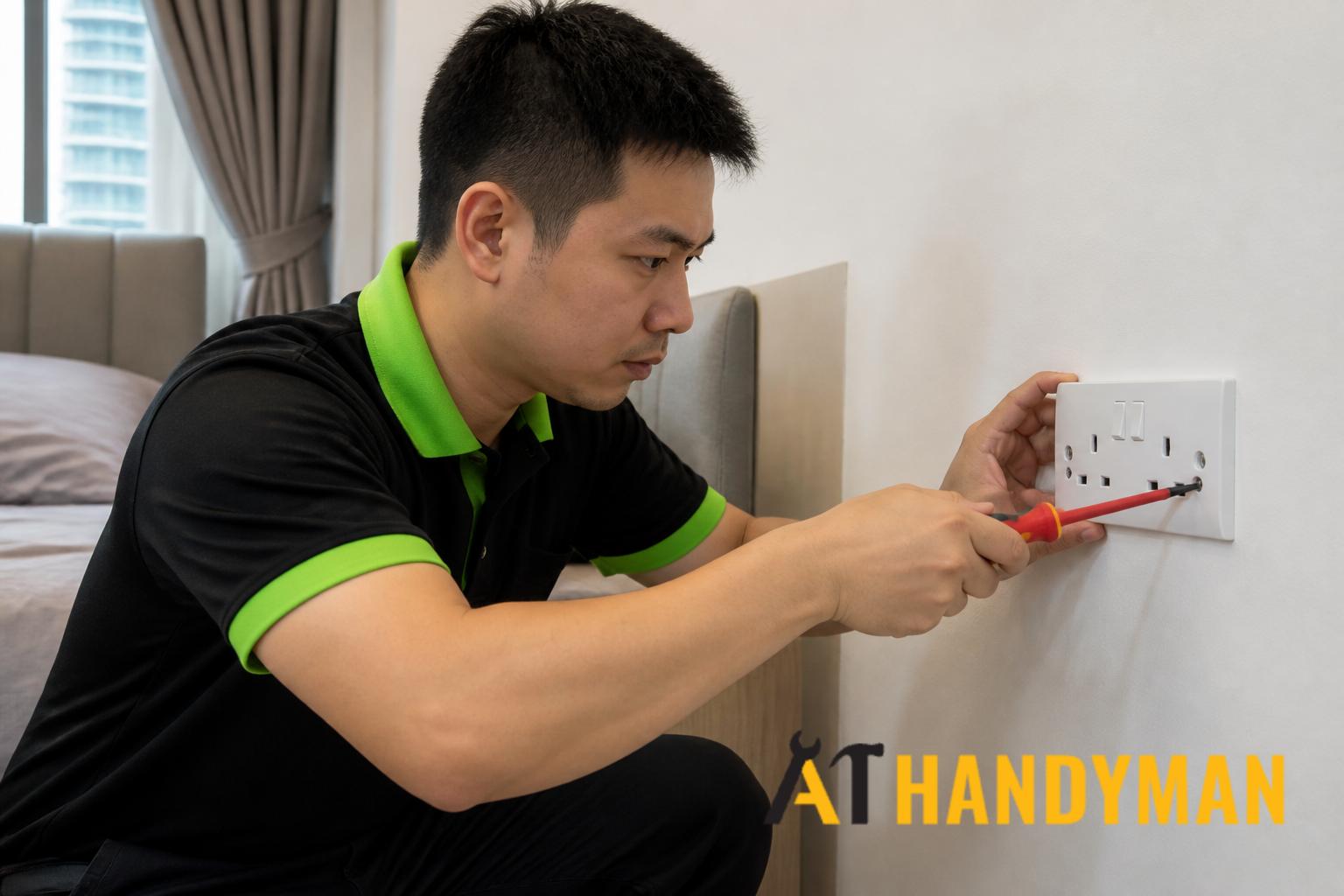
In Singapore, electrical work sits in a grey area for many homeowners and tenants: some minor tasks may be manageable for a handyman, while others should be handled by a licensed electrician. The key is to separate simple, low-risk tasks from work that involves rewiring, circuit changes, safety devices or anything that affects the electrical system as a whole.
If you are planning maintenance, installation or a small repair at home or in an office, it helps to know what a handyman can reasonably assist with and where a licensed electrician is the safer and more suitable choice. This guide explains the difference in practical terms for Singapore properties, including HDB flats, condominiums, landed homes and commercial spaces.
What a handyman can usually handle for basic electrical-related jobs
A handyman may be suitable for straightforward, non-invasive tasks that do not require altering the wiring inside walls, distribution boards or protected electrical circuits. This can include replacing simple light fittings where the task is limited and the existing wiring condition is already suitable, or helping with fixture-related work that supports an electrical item rather than modifying the electrical system itself.
In practical terms, handyman support is often considered for minor jobs such as changing a lamp holder, securing a loose socket faceplate, or assisting with the physical installation of a plug-in appliance or light fitting when no rewiring is involved. Even then, the exact scope matters: if the job requires circuit isolation, cable extension or changes to the existing electrical points, it should move to a licensed electrician.
For Singapore homes, especially older units, the age and condition of the existing wiring can change what is appropriate. A handyman may identify a visible issue and help with non-electrical parts of the task, but anything that suggests damaged insulation, overheating, tripping or inconsistent power should not be treated as a simple handyman job.
Jobs that should be left to a licensed electrician
Any job involving wiring changes, new circuits, distribution boards, breaker issues, concealed cabling or load-related concerns should be done by a licensed electrician. This includes installing new electrical points, moving sockets, rewiring sections of a room, changing the consumer unit, and troubleshooting repeated electrical faults.
Safety-critical work is another clear boundary. If the task involves earthing, circuit protection, protective devices, electrical testing or fault diagnosis beyond a visible fitting, a licensed professional is the right person. The same applies when a problem affects multiple points, causes frequent tripping, or suggests an issue inside the wall or ceiling.
In Singapore, this distinction is especially important in shared buildings and managed estates, where electrical work can affect building systems, common expectations and maintenance procedures. When in doubt, a licensed electrician is usually the correct choice for anything beyond a basic fixture replacement.
Common examples of handyman-suitable versus electrician-only tasks
Examples help make the difference clearer. A handyman may be able to help replace a light shade, install a plug-in lamp, fasten a loose cover plate, or mount a small fixture that simply connects to an existing point without rewiring. These are physical installation tasks, not electrical alterations.
By contrast, a licensed electrician should handle the installation of new ceiling light wiring, adding additional power points, relocating switches, repairing a circuit fault, or dealing with sparking, burning smells or repeated power loss. These situations involve electrical integrity rather than simple installation work.
If a job appears simple but needs access to hidden wiring or changes to the existing electrical layout, it has moved beyond handyman scope. A good rule is this: if the task changes how electricity is distributed or protected in the property, it belongs to a licensed electrician.
How property type affects the decision in Singapore
In HDB flats, the electrical setup is often compact and may include older points, upgraded fittings or mixed-condition fixtures. This makes it important to distinguish between cosmetic or fixture-related work and proper electrical work. A handyman may assist with accessible, non-invasive tasks, but anything involving the wiring itself should be assessed by a licensed electrician.
In condominiums, there may be building rules, management procedures or access considerations that affect how electrical work is carried out. For landlords and tenants, it is also important to agree on whether the task is a minor fixture replacement or a formal electrical repair, as this affects who should be engaged.
For landed homes and offices, the range of electrical issues can be broader. Additional circuits, external lighting, heavier usage patterns and equipment-related requirements often mean the job needs proper electrical assessment. A handyman may still help with selected support tasks, but the electrical side should be handled by a qualified person where necessary.
Signs that the job is no longer suitable for a handyman
Some issues should immediately raise caution. If a socket feels warm, a switch is discoloured, a breaker keeps tripping, there is a burning smell, or a fitting produces buzzing or flickering that suggests an electrical fault, it should not be treated as routine handyman work. These are signs that the problem may be inside the electrical system.
Likewise, if a job requires opening up concealed wiring, extending cables, connecting to the main supply or carrying out testing to find the cause of a fault, a licensed electrician is the more appropriate professional. A handyman can help with visible components, but not with diagnosing or altering the electrical network itself.
Homeowners sometimes ask whether a “small” electrical task can be handled informally. The safer answer is to focus on what the task actually involves, not how simple it looks from the outside. If there is any uncertainty about wiring, circuit protection or electrical safety, use a licensed electrician.
Preparing for an electrical job in your home or office
Before arranging any electrical-related work, it helps to note exactly what needs attention: the fixture type, where it is located, whether it is a replacement or a first-time installation, and whether the issue is cosmetic, mechanical or electrical. Photos of the existing setup are often useful when asking for an assessment.
For property owners and tenants, it is also wise to confirm whether the job is in a private unit, a shared area or a workplace. This can affect access, permissions and the type of professional needed. If the work seems to involve wiring changes, testing or anything safety-related, make that clear from the start so the right person can be assigned.
For a simple handyman job, preparation may include clearing access to the fitting, removing items around the work area and checking the existing fixture condition. For a licensed electrician, preparation should focus on describing the fault accurately and keeping the area accessible for inspection and safe work.
If you are unsure whether your electrical job is suitable for a handyman or needs a licensed electrician, WhatsApp A1 Handyman Singapore with photos of the fixture and working area, your property type, any approximate measurements if relevant, and the exact job you need assessed for a quotation based on the actual scope.
Conclusion
In Singapore, the best way to decide between a handyman and a licensed electrician is to look at the nature of the task. Visible fixture replacement and simple support work may suit a handyman, but anything involving wiring, circuits, testing, fault diagnosis or electrical safety should be left to a licensed electrician. Choosing the right person helps keep the job suitable, practical and safer for your property.
Choose A1 Handyman Singapore
A1 Handyman Singapore provides exceptional support when it comes to tackling home maintenance problems. With reasonable and affordable prices, you can get quality handyman workmanship. We offer a wide range of professional services like plumbing, electrical, aircon servicing, rubbish chute services, water heater services, door repair services, handyman drilling services, wall mounting installation services, TV bracket installation services, and pull up bar installation. Need help figuring out a specific issue? Read through our handyman articles and browse our past handyman projects. Over the years, we have served many satisfied customers and received positive reviews both on Google and Facebook. WhatsApp us at +65 8241 0032 for transparent quotation and honest pricing for all your handyman needs. We offer a fast and efficient service to serve any of your handyman needs!
Frequently Asked Questions
Can a handyman replace a light fitting in Singapore?
Sometimes, yes, if it is a straightforward replacement and does not require rewiring or changes to the electrical circuit. If the job involves new wiring, concealed connections or any uncertainty about the existing setup, a licensed electrician is the better choice.
Who should install a new power point or socket?
A new power point usually involves electrical wiring work and should be handled by a licensed electrician. This is not the same as replacing a visible cover plate or carrying out a purely cosmetic fixture change.
What should I do if a socket is sparking or a breaker keeps tripping?
These are signs of a potential electrical fault and should be assessed by a licensed electrician rather than treated as a handyman job. Avoid assuming it is a minor issue, because the cause may be within the wiring or circuit protection.