
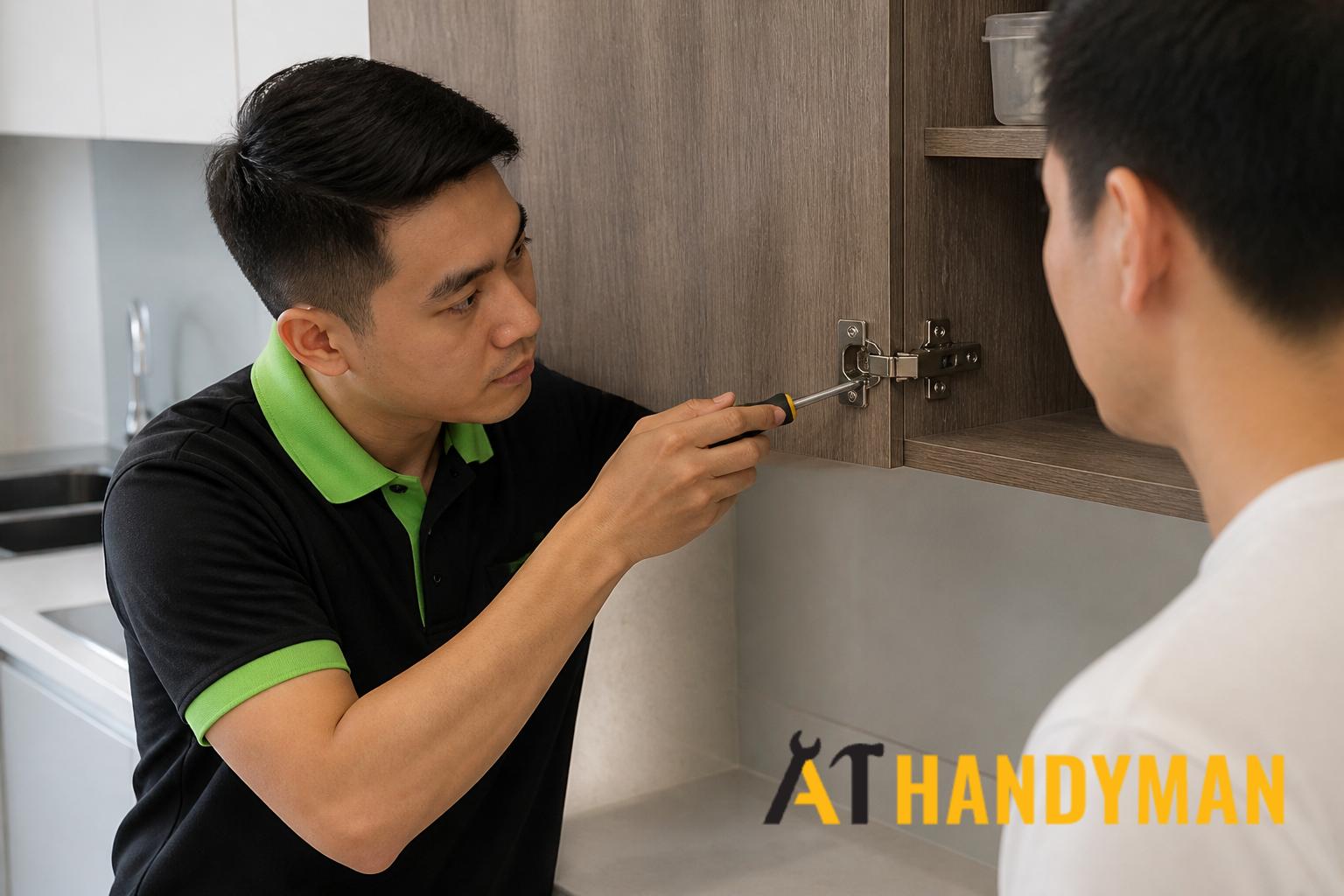
Before starting a home repair in Singapore, a handyman usually checks far more than the visible fault. The first look is about understanding what is actually affected, what materials are involved, and whether the job is a straightforward repair, a replacement, or something that needs a different specialist. This matters across HDB flats, condominiums, landed homes and offices, because the same symptom can have very different causes depending on the fixture, the age of the property and the surrounding finishes.
A proper check also helps reduce avoidable damage. For example, a loose door, a cracked wall mount point, a leaking joint or a damaged cabinet hinge may look simple on the surface, but the handyman needs to confirm the surrounding condition before touching tools. In Singapore homes, where space is often compact and finishes are closely integrated, a careful pre-work check helps the repair stay neat, practical and suitable for the property.
Confirming the Exact Problem Before Any Work Begins
The first step is usually to identify the specific issue rather than relying on a brief description alone. A handyman will look at what is happening, where it is happening, and whether the problem is isolated to one fixture or affecting nearby parts as well. A wobbly shelf, for instance, may be caused by loose screws, wall material condition, or damaged fittings, while a sticking door may involve alignment, hinge wear, or frame movement.
This check is important because repair work is not the same as replacement. A damaged hinge might be adjustable, but a cracked bracket or worn component may need to be replaced. In Singapore, where many fixtures are fitted into tiled walls, timber doors, laminate cabinets or plastered surfaces, the actual fault needs to be identified before the handyman chooses the right method.
Inspecting the Material, Surface and Surrounding Area
After identifying the issue, the handyman usually checks the material the repair is going into or around. Different surfaces behave differently. Tile, plaster, concrete, timber, metal and laminate each need a suitable approach. A fixture mounted on a solid wall is not assessed in the same way as one attached to a cabinet panel or a hollow partition surface.
The surrounding area is checked too. A small repair can be affected by nearby cracks, dampness, previous patch work, loose paint, hidden screws or existing wear. If the area has already been repaired before, the handyman may need to see whether the earlier work is still stable enough to support the new repair. This is especially relevant for wall-mounted items, curtain brackets, grab bars, shelves and door hardware.
Checking Safety Risks and Whether the Job Needs a Different Specialist
Before starting, a responsible handyman will also look for any safety concerns that could change how the job is handled. This includes signs of electrical risk near fittings, water damage around the repair point, unstable fixtures, sharp edges, or signs that the surface cannot safely take another screw, fastener or bracket. If there is any doubt, the repair should not be rushed.
Some jobs also sit near regulated or safety-critical systems. A handyman may be able to assess visible damage and prepare the area, but electrical faults, major plumbing issues, gas-related concerns and structural problems should be handled by the appropriate qualified person. In Singapore, this distinction matters because a good repair is not only about fixing what is visible, but also about choosing the right scope for the job.
Measuring the Fixture, Alignment and Fit
Many home repairs depend on accurate measurements before any drilling, fastening or adjustment begins. The handyman may check the length, spacing, depth, level and position of the fixture relative to the wall, frame or adjacent item. For doors, this can affect hinge position and closing alignment. For cabinets, shelves and rails, it affects whether the part sits straight and clears nearby surfaces.
Measurements are also important when replacing parts. A repair may involve matching an existing hinge, lock component, bracket, rod, panel or support piece. In Singapore homes, especially in compact rooms and built-in spaces, even a small mismatch can affect function or the final appearance. Proper measurement helps avoid repeat visits and unnecessary damage to surrounding finishes.
Looking at Fasteners, Mounting Points and Existing Wear
Before starting work, the handyman usually checks the current fasteners and fixing points. Loose screws, worn anchors, stripped holes, rusted parts or bent fittings can change the repair plan. If the existing mounting point has deteriorated, simply tightening it may not be enough. The handyman may need to reposition the fixing, use a different method, or replace the affected component.
This matters for wall-mounted items, door hardware, curtain fittings, storage racks and other fixtures that depend on solid attachment. The handyman will also look for signs of repeated stress, such as movement, vibration, sagging, or gaps around the fixing point. These clues help determine whether the repair is a light adjustment or a more involved restoration.
Checking Access, Working Space and Protection for Nearby Finishes
A good pre-repair check includes the work area itself. The handyman needs enough access to reach the fixture safely and to work neatly without damaging nearby items. In Singapore homes, furniture, built-in cabinetry, mirrors, tiles, glass panels and decorative finishes are often close to the repair point, so space planning matters.
Protective steps may be considered before drilling, opening panels or removing damaged parts. The handyman will usually check whether the area needs clearing, whether dust or debris could affect nearby surfaces, and whether the fixture can be worked on without disturbing adjoining items. This is especially useful for repair jobs in living rooms, bathrooms, bedrooms and service areas where space is limited.
Deciding Whether Repair, Replacement or Adjustment Is the Better Option
Not every damaged item should be repaired in the same way. Part of the handyman’s job before starting is to decide whether the fixture is better suited to repair, partial replacement or adjustment. A door that has dropped may need alignment, but a cracked component may need changing. A loose bracket may only need re-securing, but a worn mounting point may not hold reliably without additional work.
This decision is practical rather than cosmetic. It affects how long the repair may remain serviceable and whether the result will look neat once the work is complete. In Singapore, where many homeowners and tenants want an efficient fix without unnecessary disruption, this early judgement helps keep the job sensible and tidy.
For a repair check that matches the exact issue, share clear photos of the damaged item and the surrounding area, your property type, and any approximate measurements, then WhatsApp A1 Handyman Singapore for a quotation based on the actual job scope.
Conclusion
Before starting a home repair, a handyman in Singapore checks the fault, the material, the surrounding condition, the safety considerations, the fit and measurements, and whether the job should be repaired, adjusted or replaced. This careful approach helps the work stay suitable for the property and reduces the chance of avoidable follow-up issues.
Choose A1 Handyman Singapore
A1 Handyman Singapore provides outstanding handyman services in Singapore. We offer plumbing, electrical, aircon servicing, rubbish chute services, water heater services, door repair services, and provide drilling services for wall mounting installations, TV bracket installation services, and pull up bar installation. Need help figuring out a specific issue? Read through our handyman articles and browse our past handyman projects. For reliable handyman services, contact us now through WhatsApp at +65 8241 0032!
Frequently Asked Questions
Why does a handyman need to inspect the area before repairing something?
Because the visible problem is not always the full problem. The surrounding surface, fasteners, alignment and wear can affect how the repair should be handled. A proper inspection helps the handyman choose the right method before any drilling, tightening or replacement starts.
Can the same repair method be used on all home surfaces in Singapore?
No. Different surfaces such as concrete, tile, plaster, timber and laminate need different approaches. A method that suits one fixture or wall type may not be appropriate for another, so the handyman checks the material first.
What should I prepare before a handyman starts a repair visit?
It helps to clear access around the item, note any changes you have noticed, and share photos of the damaged fixture and surrounding area. If relevant, mention the property type and any approximate measurements so the repair can be assessed more accurately.