Your Trusted Handyman Service Provider in Singapore!
kitchen-cabinet-drawer-repair-a1-handyman-singapore-1

What Do Recommended Handyman Services in Singapore Usually Include in Their Job Assessment?

When people look for recommended handyman services in Singapore, they are usually not just asking for someone to “do the job”. They want to know what a proper job assessment should cover before any repair, installation, or assembly begins. A good assessment helps the handyman understand the scope, check suitability for the property, and identify any practical limitations before work starts.

In Singapore, this matters for all kinds of home and office tasks, from drilling and wall mounting to door repair, curtain rail installation, furniture assembly, grab bar installation, and minor carpentry. A careful assessment reduces guesswork, helps you compare service providers more fairly, and makes it easier to prepare the right area before the appointment.

What a handyman assessment is meant to achieve

A job assessment is the first step where the handyman reviews the task, the site conditions, and the fixture or surface involved. For recommended handyman services in Singapore, this is where the scope becomes clearer: what exactly needs to be done, what materials or fittings may be involved, and whether the work is straightforward or requires extra care.

This is especially important because different handyman tasks have different demands. For example, drilling into a wall for a TV bracket is not the same as repairing a door lock, and neither is the same as assembling furniture or installing a curtain rod. A proper assessment helps match the method to the job rather than treating all work as identical.

It also helps homeowners, tenants, landlords, and office managers understand whether the request is suitable for a general handyman service or whether it should be handled by a trade specialist. That distinction is important in Singapore, particularly for work that may involve electrical, plumbing, or safety-sensitive components.

Checking the exact task and the expected scope

The first thing a handyman usually clarifies is the exact nature of the job. “Repair the door” could mean a loose hinge, a misaligned latch, a damaged lockset, or a door that no longer closes smoothly. “Install curtain hardware” might involve a curtain rod, a rail, brackets, or replacing existing fittings. The assessment should narrow the request into a specific action.

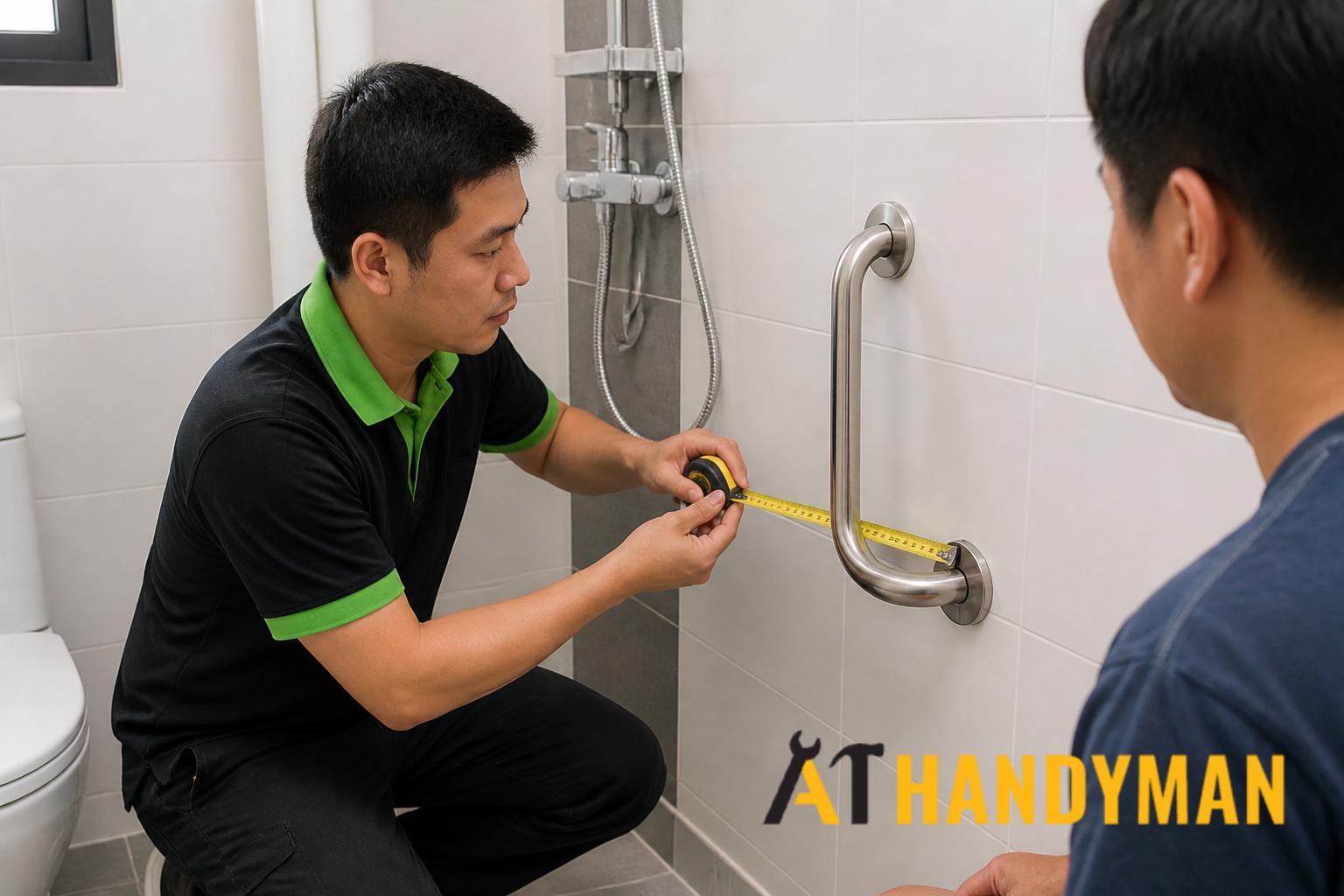
This is useful because the scope affects the approach. For drilling and mounting work, the handyman needs to know what is being installed, where it will go, and whether the wall surface is suitable. For furniture assembly, the question is whether the item is fully boxed, partly assembled, or missing parts. For grab bar installation, the location and intended use matter because the fitting must be planned carefully.

A recommended handyman service will normally look for signs that the job may require additional materials, more time, or a different fixing method. That does not mean every issue is complicated; it simply means the assessment prevents surprises once work begins.

Reviewing the property type and the working area

In Singapore, the property type matters because HDB flats, condominiums, landed homes, and offices often have different access conditions and surface materials. A job assessment usually includes a quick review of where the work will happen and whether the space is suitable for the task at hand.

For wall mounting or drilling, the handyman may need to understand whether the wall is tiled, plastered, concrete, or another finish. For curtain installation, the window or bay area and surrounding fixtures matter. For door repair, the condition of the frame, hinges, and nearby flooring may affect how the job is done. These are practical considerations, not assumptions.

In offices or commercial spaces, the assessment may also include the working hours, access restrictions, and whether the area must remain usable during the job. Good planning helps avoid disruption and keeps the work area more organised.

Identifying materials, fixtures, and existing condition

Another key part of the assessment is examining the fixture or item itself. A handyman will usually want to know whether the customer already has the item to be installed or whether parts still need to be sourced. This applies to curtain rods, wall-mounted brackets, door hardware, locks, shelves, and assembled furniture.

The existing condition is equally important. A loose bracket, damaged screw hole, warped door, cracked wall surface, or worn-out fixing point can change how the work should be approached. The assessment is where these conditions are noted so the handyman can decide whether the job is simple, needs repair before installation, or may not be suitable in its current state.

For furniture assembly, the handyman may check whether the parts are complete and whether there is enough room to assemble the item safely. For grab bars and similar fittings, the surface condition and installation location need to be reviewed with care so the job is planned appropriately.

Considering suitability, safety, and trade boundaries

Recommended handyman services in Singapore should also include a suitability check. This means the handyman considers whether the task falls within general handyman work or whether a more specialised tradesperson is more appropriate. That is especially relevant for plumbing, electrical work, or other safety-sensitive tasks.

For example, a handyman can often help with basic fixtures, mounting, carpentry repair, or door hardware. However, if the job involves electrical wiring, concealed plumbing, or work that clearly needs a licensed specialist, the assessment should recognise that limit rather than overpromising. This is part of good service, not a drawback.

Safety also matters for household items that may be used frequently or bear weight, such as grab bars, wall-mounted fittings, or door hardware. A careful assessment does not guarantee a result, but it does show that the handyman has considered the practical demands of the task before starting.

Clarifying tools, access, and preparation before work starts

A proper assessment often includes simple preparation questions. Is there enough clearance to work? Are the walls, doors, or fixtures accessible? Are there fragile items that should be moved away? These checks help the handyman prepare the right tools and avoid unnecessary delays on site.

This is especially useful for jobs like drilling, TV bracket installation, curtain installation, and furniture assembly, where space and access can affect how the work is carried out. If the area is tight, crowded, or already damaged, the handyman may need to adjust the approach or ask for a clearer view of the site before confirming the scope.

Preparation also helps the customer. When photos, measurements, and details about the property are ready in advance, it becomes easier to discuss the task accurately and compare recommended handyman services based on the actual job rather than a vague description.

Why a good assessment helps with better service comparisons

Many Singapore homeowners and tenants search for recommended handyman services because they want a reliable and practical decision, not just the lowest-effort option. A strong job assessment is one of the clearest signs of that. It shows the provider is paying attention to the fixture, the surface, the property type, and the actual scope of work.

This also makes service comparison more meaningful. Two providers may sound similar in a message, but the one that asks for photos, measurements, and clear job details is often better placed to assess the work properly. That is especially relevant for door repair, curtain rail installation, drilling, wall mounting, and assembly jobs where site conditions matter.

In short, the assessment is not just a formality. It is the point where the handyman decides whether the job is suitable, what may be needed, and how to approach the work in a sensible way for Singapore homes and offices.

If you need recommended handyman services in Singapore for a specific installation or repair task, WhatsApp A1 Handyman Singapore with photos of the fixture and working area, your property type, any approximate measurements if relevant, and a quotation request based on the actual job scope.

Conclusion

Recommended handyman services in Singapore usually include a clear job assessment that reviews the task, the property type, the fixture condition, the working area, and whether the work is suitable for a general handyman or a more specialised trade. That assessment is what helps turn a vague request into a practical plan for safe, sensible, and better-informed service.

Choose A1 Handyman Singapore

A1 Handyman Singapore provides exceptional support when it comes to tackling home maintenance problems. With reasonable and affordable prices, you can get quality handyman workmanship. We offer a wide range of professional services like plumbing, electrical, aircon servicing, rubbish chute services, water heater services, door repair services, handyman drilling services, wall mounting installation services, TV bracket installation services, and pull up bar installation. Need help figuring out a specific issue? Read through our handyman articles and browse our past handyman projects. Over the years, we have served many satisfied customers and received positive reviews both on Google and Facebook. WhatsApp us at +65 8241 0032 for transparent quotation and honest pricing for all your handyman needs. We offer a fast and efficient service to serve any of your handyman needs!

Frequently Asked Questions

What details should I send for a handyman job assessment in Singapore?

It is usually helpful to send photos of the fixture or area, a short description of the problem or installation, your property type, and any approximate measurements if relevant. These details help the handyman understand the scope more accurately before visiting.

Does a job assessment cover all handyman tasks the same way?

No. The assessment depends on the task. Wall mounting, curtain installation, door repair, furniture assembly, and grab bar installation each require different checks. A good assessment focuses on the specific fixture, surface, and working conditions for that job.

Will a handyman always handle electrical or plumbing-related work after assessment?

Not always. A responsible assessment should identify when the task is better handled by a qualified specialist, especially for electrical or plumbing work. This helps keep the job within the right scope and avoids mixing unrelated trade requirements.

Actuele kansspelen en nuttige tips vind je op https://theholylucks-casinos.nl voor een optimale ervaring

Actuele kansspelen en nuttige tips vind je op https://theholylucks-casinos.nl voor een optimale ervaring

Ben je op zoek naar de nieuwste kansspelen en handige tips om je spelervaring te optimaliseren? Dan ben je op de juiste plek! Op https://theholylucks-casinos.nl vind je een uitgebreid overzicht van verschillende online casino's, spelbeschrijvingen, en nuttige bronnen om verantwoord en succesvol te spelen. De website biedt een platform voor zowel beginnende als ervaren spelers.

De wereld van online kansspelen is constant in beweging, met nieuwe spellen, technologieën en aanbiedingen die regelmatig verschijnen. Het is belangrijk om op de hoogte te blijven van de laatste ontwikkelingen en te weten waar je betrouwbare informatie kunt vinden. The Holy Lucks Casinos probeert een onafhankelijke en objectieve bron te zijn voor al je vragen over online gokken, zodat je weloverwogen beslissingen kunt nemen en optimaal kunt genieten van de spanning en entertainment die het te bieden heeft.

De Voordelen van Online Kansspelen

Online kansspelen bieden een breed scala aan voordelen ten opzichte van traditionele casino's. Een van de belangrijkste voordelen is de toegankelijkheid. Je kunt op elk moment en op elke locatie spelen, zolang je een internetverbinding hebt. Dit maakt het een ideale vorm van entertainment voor mensen met een drukke levensstijl. Bovendien bieden online casino's vaak een grotere selectie aan spellen dan fysieke casino's. Je vindt er niet alleen klassieke casinospellen zoals roulette, blackjack en baccarat, maar ook een uitgebreide collectie aan slots, videopoker en andere spannende spellen. Een ander voordeel is de mogelijkheid om gratis te oefenen. Veel online casino's bieden demoversies van hun spellen aan, zodat je de regels en strategieën kunt leren zonder risico op verlies. Dit is vooral handig voor beginners die nog niet vertrouwd zijn met de verschillende spellen.

Bonussen en Promoties

Online casino's staan bekend om hun aantrekkelijke bonussen en promoties. Deze kunnen variëren van welkomstbonussen voor nieuwe spelers tot loyaliteitsprogramma's voor bestaande klanten. Bonussen kunnen je speelbudget vergroten en je winkansen verhogen. Het is echter belangrijk om de voorwaarden van de bonus goed te lezen voordat je hem accepteert. Let bijvoorbeeld op de inzetvereisten, de maximale bonusbedrag en de geldigheidstermijn. Sommige bonussen zijn alleen geldig voor bepaalde spellen, terwijl andere een minimumstorting vereisen.

Type BonusBeschrijvingVoorwaarden
WelkomstbonusBonus voor nieuwe spelers bij registratieInzetvereisten, minimumstorting
StortingsbonusBonus bij het storten van geldPercentage van de storting, inzetvereisten
Gratis SpinsGratis spins op geselecteerde slotsWinsten zijn onderhevig aan inzetvereisten
LoyaliteitsprogrammaPunten sparen bij het spelen voor exclusieve beloningenAfhankelijk van het niveau in het programma

Het begrijpen van deze voorwaarden is cruciaal om effectief van een bonus te kunnen profiteren en teleurstellingen te voorkomen. Vergelijk verschillende aanbiedingen en kies de bonus die het beste bij je speelstijl past.

Het Kiezen van een Betrouwbaar Online Casino

Bij het kiezen van een online casino is het belangrijk om op verschillende factoren te letten. Allereerst moet je ervoor zorgen dat het casino een geldige vergunning heeft. Een vergunning garandeert dat het casino voldoet aan strenge regels en voorschriften op het gebied van veiligheid, eerlijkheid en verantwoord spelen. Controleer of het casino een vergunning heeft van een gerenommeerde autoriteit, zoals de Malta Gaming Authority (MGA) of de UK Gambling Commission. Daarnaast is het belangrijk om de beveiligingsmaatregelen van het casino te beoordelen. Zoek naar casino's die gebruik maken van SSL-encryptie om je persoonlijke en financiële gegevens te beschermen. Lees ook de algemene voorwaarden van het casino zorgvuldig door om te zien welke rechten en plichten je hebt. Een betrouwbaar casino staat garant voor eerlijk spel, snelle uitbetalingen en een goede klantenservice.

Betaalmethoden en Uitbetalingen

Een betrouwbaar online casino biedt een breed scala aan betaalmethoden aan, zodat je gemakkelijk geld kunt storten en opnemen. Populaire betaalmethoden zijn onder andere creditcards, e-wallets (zoals Skrill en Neteller), bankoverschrijvingen en prepaid kaarten. Zorg ervoor dat het casino de betaalmethode aanbiedt die je het meest vertrouwt en dat de transacties veilig en snel worden verwerkt. Let ook op de uitbetalingstermijnen van het casino. Een betrouwbaar casino betaalt je winsten snel en efficiënt uit, zonder onnodige vertragingen. Controleer de uitbetalingslimieten en eventuele transactiekosten voordat je een opname aanvraagt.

  • Controleer de vergunning van het casino.
  • Beoordeel de beveiligingsmaatregelen.
  • Lees de algemene voorwaarden zorgvuldig.
  • Kies een vertrouwde betaalmethode.
  • Let op de uitbetalingstermijnen.

Door deze punten in overweging te nemen, kun je een weloverwogen beslissing nemen en een betrouwbaar online casino kiezen.

Verantwoord Spelen: Belangrijke Tips

Het is essentieel om verantwoord te spelen bij online kansspelen. Stel jezelf een budget vast en houd je eraan. Speel nooit met geld dat je niet kunt missen en probeer je verliezen niet terug te winnen. Neem regelmatig pauzes en speel niet te lang achter elkaar. Online kansspelen moeten een vorm van entertainment zijn en niet een bron van stress of financiële problemen. Als je merkt dat je problemen hebt met je spelgedrag, zoek dan hulp. Er zijn verschillende organisaties die je kunnen ondersteunen en adviseren. Het is belangrijk om je bewust te zijn van de risico's van kansspelen en om de nodige maatregelen te nemen om jezelf te beschermen.

Hulporganisaties

Er zijn verschillende hulporganisaties die je kunnen helpen als je problemen hebt met je spelgedrag. Deze organisaties bieden onder andere counseling, lotgenotengroepen en online ondersteuning. Het is niet schadelijk om hulp te zoeken; het is juist een teken van kracht en verantwoordelijkheid. Door hulp te zoeken, kun je je spelgedrag onder controle krijgen en weer genieten van het leven. Zoek de juiste ondersteuning en neem de eerste stap naar een gezonder en evenwichtiger leven.

  1. Stel een budget vast en houd je eraan.
  2. Speel nooit met geld dat je niet kunt missen.
  3. Neem regelmatig pauzes.
  4. Zoek hulp als je problemen hebt.
  5. Speel alleen voor je plezier.

Deze eenvoudige tips kunnen je helpen om verantwoord te spelen en te voorkomen dat je in de problemen komt.

De Toekomst van Online Kansspelen

De online kansspelindustrie is voortdurend in ontwikkeling. Nieuwe technologieën, zoals virtual reality (VR) en augmented reality (AR), bieden nieuwe mogelijkheden voor een meeslepende en interactieve spelervaring. Ook blockchain-technologie en cryptocurrency's winnen aan populariteit in de online casino wereld, waardoor snellere en veiligere transacties mogelijk worden. We kunnen in de toekomst ook meer regulering verwachten, met als doel de spelers te beschermen en een eerlijke en transparante markt te creëren. Het is een spannende tijd voor de online kansspelindustrie, met veel innovatie en groei.

Het Belang van Informatie en Voorlichting

Het is essentieel dat spelers goed geïnformeerd zijn over de risico's en voordelen van online kansspelen. Betrouwbare informatiebronnen, zoals https://theholylucks-casinos.nl, kunnen je helpen om weloverwogen beslissingen te nemen en verantwoord te spelen. Het is belangrijk om kritisch te zijn en niet blind te vertrouwen op reclame of marketinguitingen. Doe je eigen onderzoek en vergelijk verschillende casino's en spellen voordat je begint te spelen. Door je goed te informeren, kun je het meeste uit je spelervaring halen en tegelijkertijd de risico's minimaliseren. Online gokken moet leuk en ontspannend zijn, en met de juiste kennis en aanpak kan dit zeker het geval zijn.

Door de voortdurende evolutie van de technologie en regelgeving is het van cruciaal belang voor spelers om op de hoogte te blijven van de laatste ontwikkelingen in de branche. Dit stelt hen in staat om eerlijke spelmogelijkheden te benutten en hun spelervaring te optimaliseren. Een proactieve houding ten opzichte van informatievergaring is de sleutel tot een veilige en plezierige online gokervaring.

tv-installation-services-a1-handyman-singapore-commercial-tampines-7

How Does a Handyman Drilling Service Provider in Singapore Choose the Right Anchors and Fixings?

Choosing the right anchors and fixings is one of the most important parts of a safe and neat drilling job in Singapore. Whether the task is wall mounting, curtain installation, grab bar fitting, shelving, or bracket installation, the fixing must suit both the wall material and the item being installed. A good handyman drilling service provider does not simply drill a hole and insert a plug at random; the choice depends on the wall type, the weight and shape of the item, the expected movement, and how the surface will be used over time.

Why anchors and fixings matter in drilling work

Anchors and fixings are the connection between the wall and the item being mounted. If the fixing is unsuitable, the item may loosen, lean, crack the surface, or fall. In a Singapore home or office, this matters especially for items used daily, such as mirrors, shelves, curtain rods, toilet accessories, TV brackets and safety bars.

The right choice helps the installation look tidy and perform properly. It also reduces the chance of unnecessary damage to tiles, plasterboard, concrete, brick or other wall finishes. For a handyman, the goal is not just to complete the drilling, but to match the fixing method to the actual surface and the intended use.

Start with the wall material, not the item alone

Before selecting an anchor, a handyman drilling service provider will usually assess what the wall is made of. A solid concrete wall behaves very differently from tiled masonry, hollow partitions, or plasterboard. Some fixings are designed to expand in solid substrates, while others are made to grip from behind in hollow walls.

In Singapore, many homes and offices have a mix of surfaces. A bathroom may have tiles over a solid backing, while a partition wall in a study or office may be hollow. The same screw or wall plug may not suit both. Proper identification of the substrate is therefore the first step in choosing a safe and appropriate fixing.

Where tiles are involved, care is also needed to avoid cracking or slipping during drilling. The handyman may choose a fixing system that suits the tile and the base material beneath it, rather than relying on the tile surface alone.

Match the fixing to the weight and use of the installation

Different items place different demands on the wall. A light picture frame, for example, does not require the same type of anchor as a large TV bracket, pull-out shelf, or bathroom grab bar. The bigger issue is not only weight, but also how the item is used. A shelf that holds ornaments is different from one carrying books or kitchen items.

A knowledgeable handyman will consider whether the load is mostly static or whether it may be pulled, twisted or adjusted during use. Curtain rods, for instance, are repeatedly opened and closed, so the fixings need to cope with daily movement. Grab bars and similar fittings also deserve extra care because they are used for support.

Because actual load capacity depends on many factors, including the wall condition and the full installation method, it is better to avoid guesswork. A suitable anchor should be selected based on the actual task and surface, not just on the size of the screw.

Common anchor and fixing types used in Singapore drilling jobs

In general handyman drilling work, common options may include plastic wall plugs, masonry screws, expansion anchors, toggle-style fixings for hollow walls, and other purpose-made fasteners. Each type works in a different way, and each is suited to a different surface and task.

Plastic wall plugs are often used for lighter applications in solid materials when paired with the correct screw. Expansion-style anchors are generally chosen where a firmer grip is needed in solid substrates. Hollow-wall fixings are different again, because they are designed to spread load across the back of the wall rather than relying on a solid mass behind the hole.

A provider should not simply use the same fixing for every job. For example, a curtain bracket, a wall-mounted cabinet and a bathroom accessory may all require different fasteners even if the drilling looks similar from the outside.

How a handyman checks suitability before drilling

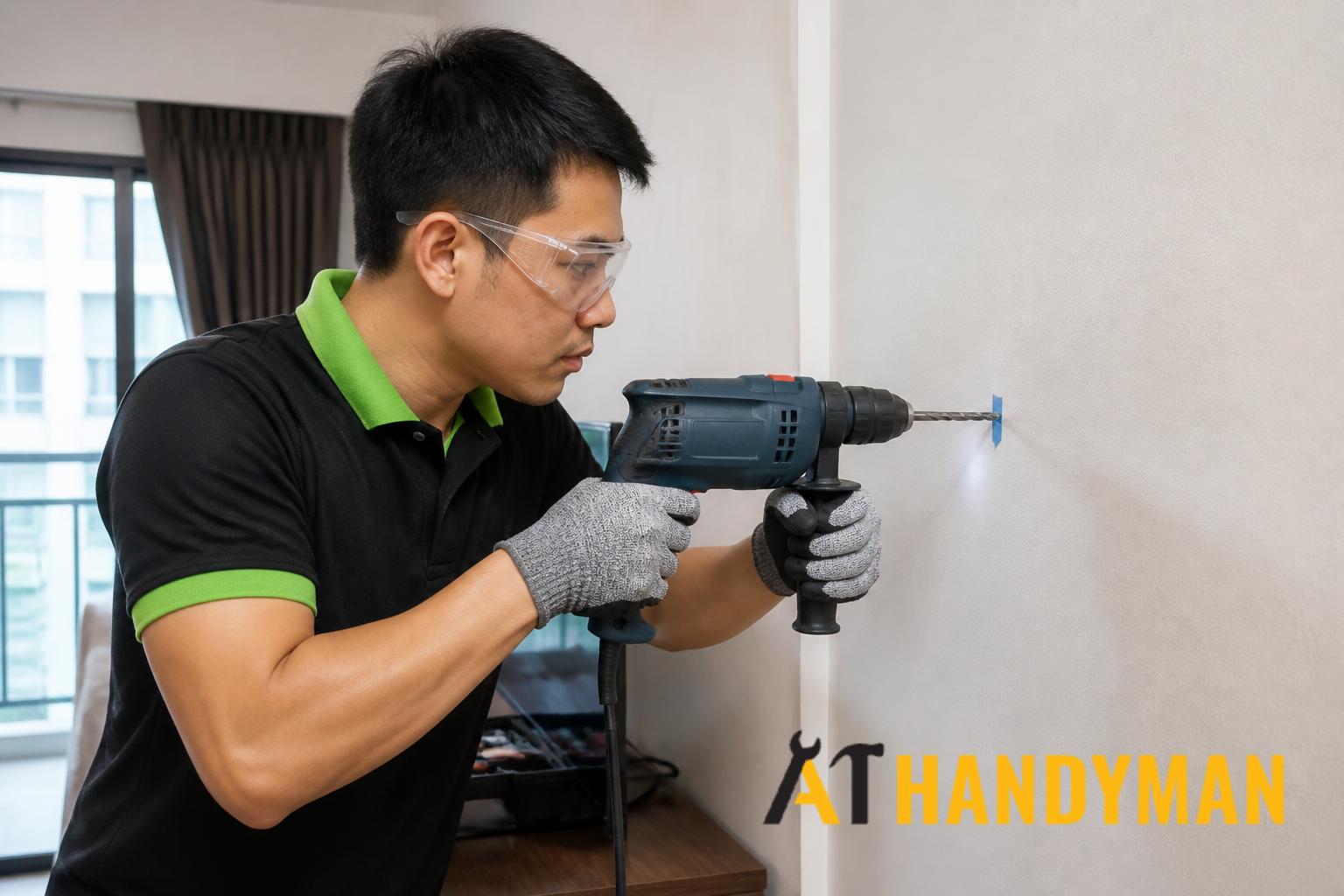
A careful drilling service usually begins with a visual assessment of the location, followed by measurement and marking. The handyman will look at the wall surface, nearby edges, existing holes, pipes, cables, fittings and the proposed position of the item. This helps reduce the risk of damage and improves alignment.

If the item comes with manufacturer-provided brackets or instructions, those details should be checked against the wall condition. However, the wall itself still determines what is practical. A fixing may look suitable on paper but still be inappropriate if the substrate is weak, hollow, uneven or already patched.

For Singapore properties, it is also common to consider the final appearance. A neat installation usually requires the right drill bit, correct hole size, proper spacing and tidy finishing so that the mounted item sits level and secure.

Special considerations for bathrooms, kitchens and other busy areas

Bathrooms and kitchens often require extra thought because of moisture, tiles and frequent use. In these areas, the handyman must be careful with drilling position and fixing choice so that the installation is stable and the surrounding surface is not damaged unnecessarily. Tiled walls, in particular, may need a more measured approach during drilling.

For fittings such as towel bars, toilet accessories, grab bars or shelves, the fixing must suit both the wall and the everyday use of the item. If an item may be exposed to steam, splash or repeated handling, the hardware should be selected with durability in mind. Corrosion resistance and good installation practice are both important.

In kitchens or service areas, brackets and shelves may also be exposed to heat, moisture or more frequent loading. The correct fixing helps maintain a safer and more reliable installation over time.

When a different specialist may be needed

Not every drilling-related task is purely a handyman matter. If the work involves concealed electrical wiring, plumbing lines, structural concerns, or regulated building alterations, the provider should take care not to proceed blindly. The safe choice may be to stop, inspect further, or refer the work to the appropriate qualified person.

This is particularly important where holes are needed near switches, sockets, water points, service ducts or known utility routes. A responsible handyman drilling service provider should avoid assumptions and should not drill into areas where hidden services may be present.

Good judgment matters just as much as the anchor itself. The right fixing cannot compensate for drilling in the wrong place.

If you need help with drilling, wall mounting or choosing suitable anchors and fixings in Singapore, WhatsApp A1 Handyman Singapore with clear photos of the fixture and wall, your property type, approximate measurements if relevant, and the exact job scope so a quotation can be based on the actual work required.

Conclusion

Choosing the right anchors and fixings is a practical process that depends on wall material, item weight, daily use and the surrounding conditions. A reliable handyman drilling service provider in Singapore will assess the surface first, match the fastener to the task, and drill with care so the installation is both neat and appropriate for the space. For safe, well-matched drilling work, the key is careful selection rather than using a one-size-fits-all fixing.

Choose A1 Handyman Singapore

A1 Handyman Singapore provides outstanding handyman services in Singapore. We offer plumbing, electrical, aircon servicing, rubbish chute services, water heater services, door repair services, and provide drilling services for wall mounting installations, TV bracket installation services, and pull up bar installation. Need help figuring out a specific issue? Read through our handyman articles and browse our past handyman projects. For reliable handyman services, contact us now through WhatsApp at +65 8241 0032!

Frequently Asked Questions

How does a handyman know which anchor to use?

The choice usually depends on the wall material, the weight of the item, and how the item will be used. A solid concrete or masonry wall may suit one type of fixing, while a hollow partition may need a different system altogether.

Can the same fixing be used for curtain rods and TV brackets?

Not usually. Curtain rods and TV brackets place different kinds of stress on the wall. A TV bracket often needs a more carefully selected fixing because of the weight and the way the load is held away from the wall.

Why is drilling into tiled walls more delicate?

Tiled walls can crack or chip if drilling is done carelessly. The handyman must choose the right bit, drilling method and fixing type so that the tile surface and the backing material are both taken into account.

How Is Handyman Drilling in Singapore Carried Out on Concrete, Brick and Partition Walls? by A1 Handyman Singapore

How Is Handyman Drilling in Singapore Carried Out on Concrete, Brick and Partition Walls?

Handyman drilling in Singapore is not simply a matter of making a hole in a wall. The wall material, the fixing required, the surrounding surface finish and the property type all affect how the job is carried out. A concrete wall, a brick wall and a partition wall each behave differently when drilled, so the method, tools and care taken must match the wall type and the item being installed.

For homeowners, tenants, landlords and office users, the main concern is usually whether the drilling is suitable for the wall, the fixture and the intended use. Whether you are planning to mount a shelf, install a curtain rail, hang a mirror or secure a bracket, the drilling approach should be appropriate for the wall structure and the finish around it. In Singapore, that is especially important in HDB flats, condominiums and offices where wall construction can vary from room to room.

Understanding the Wall Type Before Drilling

The first step in handyman drilling is identifying the wall material. Concrete walls are generally dense and require more effort and the right drill bit to penetrate cleanly. Brick walls may be harder or more brittle depending on the wall construction, and drilling must be done carefully to reduce crumbling or uneven holes. Partition walls are usually lighter in construction and may not be suitable for heavier fixings without the correct support or fastening method.

This identification matters because the wrong approach can damage the wall surface, create an oversized hole or leave the fixing unstable. A professional handyman will usually assess whether the wall is solid, hollow or a mixture of layers before proceeding. In Singapore homes and offices, this check is particularly useful where decorative finishes, paintwork or tiled surfaces need to be preserved.

How Drilling Is Carried Out on Concrete Walls

Concrete walls are commonly found in many Singapore properties and are usually drilled with equipment suitable for dense surfaces. The work often begins with marking the drilling points accurately, checking alignment and confirming that the chosen position suits the fixture. A suitable masonry bit and controlled pressure are then used so the hole is formed steadily rather than forced through the surface.

Concrete drilling needs care because the surface is hard and can produce dust and vibration. The handyman must also avoid drilling in places that are unsuitable for the intended installation, such as where other hidden elements may be present. For fittings like TV brackets, grab bars, curtain supports or shelving, the drilling pattern should match the fixing design rather than being placed arbitrarily on the wall.

How Drilling Is Carried Out on Brick Walls

Brick walls require a different approach because the wall may be more susceptible to cracking, chipping or surface wear if handled roughly. Before drilling, the area is usually measured and marked carefully to ensure the hole is placed in a sound section of the wall. The drill speed and pressure should be controlled so the brick face is not damaged unnecessarily.

Depending on the brick condition and the finish over it, a handyman may need to work more cautiously around joints or edges. This is important for curtain rail installation, wall mounting and other fixings that need neat alignment. Brick walls can also vary significantly in quality, so the drilling method should be adapted to the actual wall condition rather than assumed from appearance alone.

How Drilling Is Carried Out on Partition Walls

Partition walls are commonly used in modern Singapore interiors for room division, office layouts or lightweight internal structures. They are not the same as solid concrete or brick walls, so drilling them requires extra care. A partition wall may be hollow, thinner or built with boards over a frame, which means the fixing method must suit the wall’s internal structure.

For lighter fixtures, a handyman may be able to use suitable fixings that hold well in a partition wall. For heavier items, the wall may need a different solution or may simply not be suitable without another support method. This is why it is important not to assume that a wall can carry weight just because it looks firm on the surface. The safest approach is to assess the wall type first and match the drilling and fixing method to the job.

Common Fixtures Installed Through Handyman Drilling

In Singapore homes and offices, drilling is often needed for practical installations rather than decorative purposes. Common examples include curtain rails, shelves, wall hooks, mirrors, framed pictures, small storage fittings, grab bars and TV brackets. Each item places a different kind of demand on the wall, so the drilling pattern and fixing choice should reflect the fixture’s shape and use.

For example, a curtain rail may need evenly spaced points for support, while a wall-mounted bracket usually needs accurate alignment and secure anchoring. A grab bar should be positioned with particular attention to usability and the wall’s suitability. Even simple items benefit from careful measurement because poor placement can cause uneven results or unnecessary holes in the surface.

What a Handyman Usually Checks Before Drilling

Before drilling begins, the handyman will normally check the proposed location, the wall surface and the fixture being installed. This includes confirming measurements, making sure the item will sit level and checking whether the wall finish needs extra protection. In a home or office, the surrounding area may also need to be cleared so the work can be done neatly and safely.

It is also sensible to consider what is behind or around the drilling point. While the exact conditions depend on the property, a careful handyman does not drill blindly into a wall without first looking at the site and the intended use. This is especially important in Singapore properties where wall construction and finishes can differ within the same unit.

Why Professional Drilling Matters for Singapore Properties

Professional drilling is about more than making a neat hole. It is about choosing the right method for the wall, keeping the fixture secure and reducing avoidable damage to the property. This matters for HDB flats, condominiums, landed homes and office spaces alike, because the wall type may affect both the installation result and the long-term stability of the fixture.

It also helps to reduce common problems such as chipped paint, uneven holes, loose fixings or visible surface damage. A proper handyman service should be able to carry out drilling in a way that is suited to the wall material and the item being mounted, while keeping the work practical and tidy for the space involved.

If you need handyman drilling in Singapore for a concrete, brick or partition wall, WhatsApp A1 Handyman Singapore with photos of the fixture and wall area, your property type and any approximate measurements so the job scope can be assessed for a suitable quotation.

Conclusion

Handyman drilling in Singapore should always be matched to the wall type, the fixture and the property setting. Concrete, brick and partition walls each require a different level of care, and the right approach helps support a neater and more suitable installation. Whether the task is for a home or an office, proper assessment before drilling is the key to a practical result.

Choose A1 Handyman Singapore

A1 Handyman Singapore provides exceptional support when it comes to tackling home maintenance problems. With reasonable and affordable prices, you can get quality handyman workmanship. We offer a wide range of professional services like plumbing, electrical, aircon servicing, rubbish chute services, water heater services, door repair services, handyman drilling services, wall mounting installation services, TV bracket installation services, and pull up bar installation. Need help figuring out a specific issue? Read through our handyman articles and browse our past handyman projects. Over the years, we have served many satisfied customers and received positive reviews both on Google and Facebook. WhatsApp us at +65 8241 0032 for transparent quotation and honest pricing for all your handyman needs. We offer a fast and efficient service to serve any of your handyman needs!

Frequently Asked Questions

Can all walls in Singapore be drilled the same way?

No. Concrete, brick and partition walls behave differently, so the drilling method and fixing choice should match the wall type. A suitable approach helps reduce damage and improves the chance of a neat installation.

Are partition walls suitable for heavy fixtures?

Not always. Partition walls may be hollow or lighter in construction, so they may not be appropriate for heavier items without the correct support or fastening method. The wall should be assessed before any drilling is done.

What information should I prepare before requesting drilling work?

It helps to prepare photos of the wall and fixture, the property type, the intended installation point and any approximate measurements if relevant. This makes it easier to assess the job scope for the correct drilling approach.

How Does a Carpentry Handyman in Singapore Decide Whether a Repair or Replacement Is Needed? by A1 Handyman Singapore

How Does a Carpentry Handyman in Singapore Decide Whether a Repair or Replacement Is Needed?

When a carpentry handyman in Singapore is asked whether an item should be repaired or replaced, the answer is rarely based on appearance alone. A proper decision usually depends on the material, the extent of damage, the age of the item, how it is used day to day, and whether the problem is isolated or part of a wider failure. For HDB flats, condos, landed homes and even office spaces, this practical judgement helps avoid unnecessary replacement while also preventing repeated call-backs for something that is no longer worth patching.

In carpentry, the line between repair and replacement is not always obvious. A loose hinge, swollen cabinet edge or cracked panel may be simple to rectify in one case, but a sign that the structure, board core or joinery has deteriorated in another. The main goal is to restore safe, usable function with a result that suits the surrounding fixture and the condition of the property.

What a carpentry handyman looks at first

The first step is usually a visual and hands-on check of the affected item. A handyman will look at the size and location of the damage, whether the problem is cosmetic or structural, and whether the item still opens, closes, supports or aligns properly. For example, a cabinet door that sits unevenly because of a loose hinge may only need adjustment or hardware replacement, while a swollen carcass with broken fixings may point towards a larger repair or replacement.

Material condition matters as well. Solid timber, laminated boards, plywood and MDF can behave very differently when exposed to wear or moisture. One material may allow localised patching, while another may show swelling, delamination or crumbling at the edges that makes a neat repair difficult. In Singapore, where humidity and occasional moisture exposure are common, this assessment is especially important for kitchen cabinets, bathroom carpentry and storage units near windows or service areas.

When repair is usually the sensible choice

Repair tends to make sense when the damage is limited and the main structure is still sound. Typical examples include loose hinges, worn catches, minor surface chips, detached handles, misaligned cabinet doors, small cracks in a panel edge, or a shelf that needs re-securing. In these situations, the handyman may be able to tighten, re-fix, patch, fill, replace small hardware parts or re-align the fixture without disturbing the whole unit.

Repair is also often preferable when the item is still matching the surrounding carpentry and replacement would create an awkward visual mismatch. In built-in wardrobes, kitchen run units and vanity cabinets, a local repair can preserve the original layout and reduce disruption. Where the defect is isolated and the rest of the carpentry remains serviceable, repair is usually the more practical option.

When replacement becomes the better option

Replacement becomes more likely when the damage affects the structure rather than a single fitting. If a cabinet base has softened, the board has swollen badly, or the side panel is no longer holding screws securely, a repair may only provide a temporary result. The same applies when repeated moisture exposure has weakened the material, or when several parts of the same unit are already failing at once.

A handyman may also recommend replacement if the repair would be more involved than the value or usefulness of the item justifies. For example, if multiple sections need rebuilding, if matching existing laminate is difficult, or if the old carpentry no longer functions well for the space, replacing the affected section can be the more sensible long-term decision. This is particularly relevant in older Singapore homes where previous repairs may have accumulated over time.

How damage type affects the decision

Different kinds of damage point towards different solutions. Cosmetic issues such as scratches, small dents, minor peeling, or light chips often respond well to repair. Functional issues such as a sticking drawer, loose runner, detached hinge, or misaligned panel can also be repaired if the underlying board and fixings remain serviceable. These are the kinds of problems where targeted workmanship can restore everyday use without replacing the whole item.

On the other hand, problems involving water damage, extensive warping, repeated breakage at the same point, or large sections of broken substrate often shift the decision towards replacement. If the board has lost its shape or cannot reliably hold hardware, the repair may not last. A careful handyman will therefore consider not just what is visibly broken, but how the damage affects the whole unit’s function and stability.

Why location in the home matters

The location of the carpentry often influences whether repair is worthwhile. Kitchen units, sink cabinets, bathroom storage and window-adjacent fittings are more exposed to moisture and may deteriorate faster than furniture in a dry bedroom. In such places, a repair may be suitable only if the damage is limited and the surrounding material is still in good condition. If moisture has spread, replacement of the affected section may be more practical.

In living rooms, bedrooms and study areas, wear is often caused by frequent use rather than water. Wardrobe doors, shelving, study cabinets and TV consoles may fail through hinge fatigue, loose joints or surface damage. These are often more repair-friendly, provided the structure remains stable. For office carpentry, the decision may also consider how much downtime the space can tolerate and whether the fixture still supports daily operations effectively.

Appearance, finish and matching considerations

Another factor is how visible the repair will be after the work is done. If the item is highly prominent, such as a feature cabinet, built-in wardrobe front or reception counter, the handyman will consider whether the repaired area can blend reasonably with the existing finish. Some repairs are technically possible but still leave a noticeable difference in colour, texture or grain pattern, especially when old laminate or veneer is involved.

When a clean match is difficult, replacement of the affected component may produce a more acceptable result. This does not always mean replacing the entire cabinet or furniture piece; sometimes only the damaged panel, door leaf or section needs to be renewed. The aim is to balance appearance, practicality and the extent of intervention required.

How a handyman balances cost, longevity and disruption

The decision between repair and replacement is also influenced by how much disruption the job will cause. A smaller repair can often be completed with less disturbance to the surrounding area, which matters in compact Singapore homes and occupied office spaces. Replacement may require more time, more materials and possible adjustments to surrounding fittings, especially if the new part must align with existing cabinetry or hardware.

At the same time, a repair that is too minor for the level of damage may become poor value if it needs repeating. A good carpentry handyman weighs the immediate fix against how long the result is likely to remain usable in normal conditions. The best choice is not always the cheapest or the most extensive; it is the one that makes the fixture safe, functional and suitable for the space.

If you are unsure whether your carpentry needs repair or replacement, WhatsApp A1 Handyman Singapore with photos of the damaged fixture, the property type, approximate measurements if relevant and a brief description of the issue so you can discuss the job scope and quotation based on the actual condition.

Conclusion

A carpentry handyman in Singapore decides between repair and replacement by looking at the extent of damage, the condition of the material, the function of the fixture, the surrounding finish and whether the work is likely to last. Small, localised issues can often be repaired neatly, while structural damage, repeated deterioration or moisture-related weakening may make replacement the more practical choice. The right decision is the one that suits the item, the space and the way it is used.

Choose A1 Handyman Singapore

A1 Handyman Singapore provides outstanding handyman services in Singapore. We offer plumbing, electrical, aircon servicing, rubbish chute services, water heater services, door repair services, and provide drilling services for wall mounting installations, TV bracket installation services, and pull up bar installation. Need help figuring out a specific issue? Read through our handyman articles and browse our past handyman projects. For reliable handyman services, contact us now through WhatsApp at +65 8241 0032!

Frequently Asked Questions

Can a swollen cabinet panel always be repaired?

Not always. If the swelling is minor and only affects a small area, a repair may be possible. If the board has lost strength, no longer holds screws properly or has been badly affected by moisture, replacement is often the more sensible option.

Is it better to repair or replace old wardrobe doors?

It depends on the condition of the door, hinges, frame and surrounding board. A door with loose hardware or small surface wear may be repaired, but a door with warping, repeated misalignment or damaged edges may be better replaced.

How does a handyman decide if a furniture repair is worth doing?

The handyman will usually consider how severe the damage is, whether the structure is still stable, whether the repair can blend with the finish, and whether the item will remain practical after the work. If the repair is likely to be short-lived or visually unsatisfactory, replacement may be recommended instead.

What Small Repair Jobs Can a Carpentry Handyman in Singapore Handle? by A1 Handyman Singapore

What Small Repair Jobs Can a Carpentry Handyman in Singapore Handle?

A carpentry handyman in Singapore can handle many small repair jobs that help keep cupboards, doors, shelves and other built-in woodwork in good working order. For homeowners, tenants, landlords and office users, these are often the practical fixes that make a space feel neat, usable and safe without needing a full renovation.

In most cases, the value of a carpentry handyman is in dealing with minor wear and tear, loose fittings, surface damage and small adjustments to timber-based fixtures. The exact scope depends on the condition of the item, the material used, how it was originally installed and whether the issue is confined to the carpentry itself or linked to another trade such as plumbing, electrical or door hardware work.

Common small carpentry repair jobs in Singapore homes

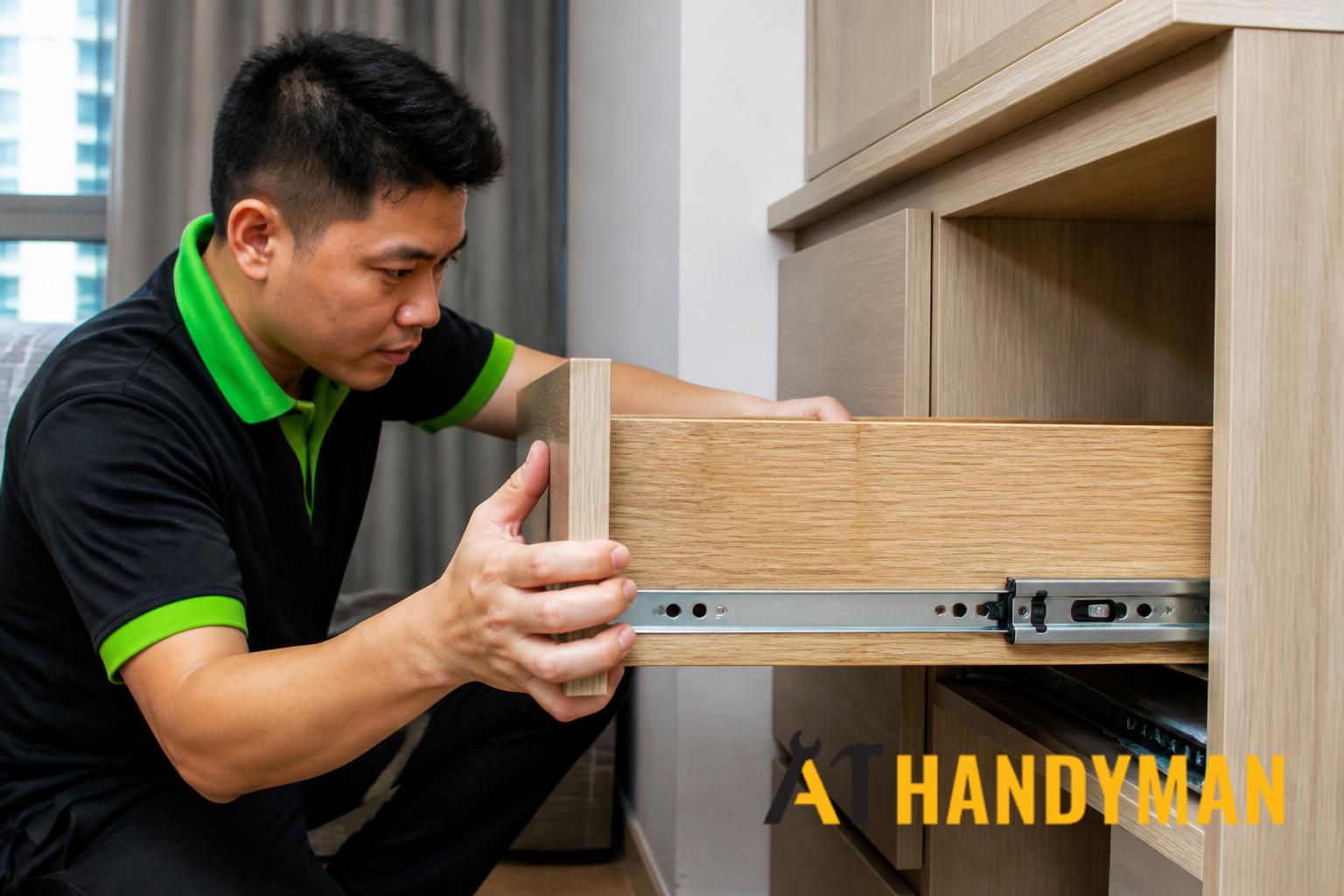
Many small repair jobs involve everyday built-in furniture and storage pieces. These can include loose cabinet hinges, sticking cupboard doors, misaligned drawer fronts, chipped laminate edges, sagging shelf boards and broken internal supports. A carpentry handyman may also help with small touch-ups where a fixture is still structurally usable but needs attention to remain convenient.

Kitchen cabinets, bedroom wardrobes, vanity units and study tables are common examples. In Singapore homes, frequent use, humidity and general ageing can cause panels to swell, joints to loosen or finishes to wear. A handyman can often inspect the affected area, identify the visible problem and carry out a repair that is appropriate to the size and condition of the item.

For minor jobs, the aim is usually to restore function and appearance rather than replace the entire fixture. That may mean tightening fittings, replacing damaged hardware, re-fixing a loosened panel or making a small adjustment so a door or drawer closes more smoothly.

Cabinet doors, drawers and hinges

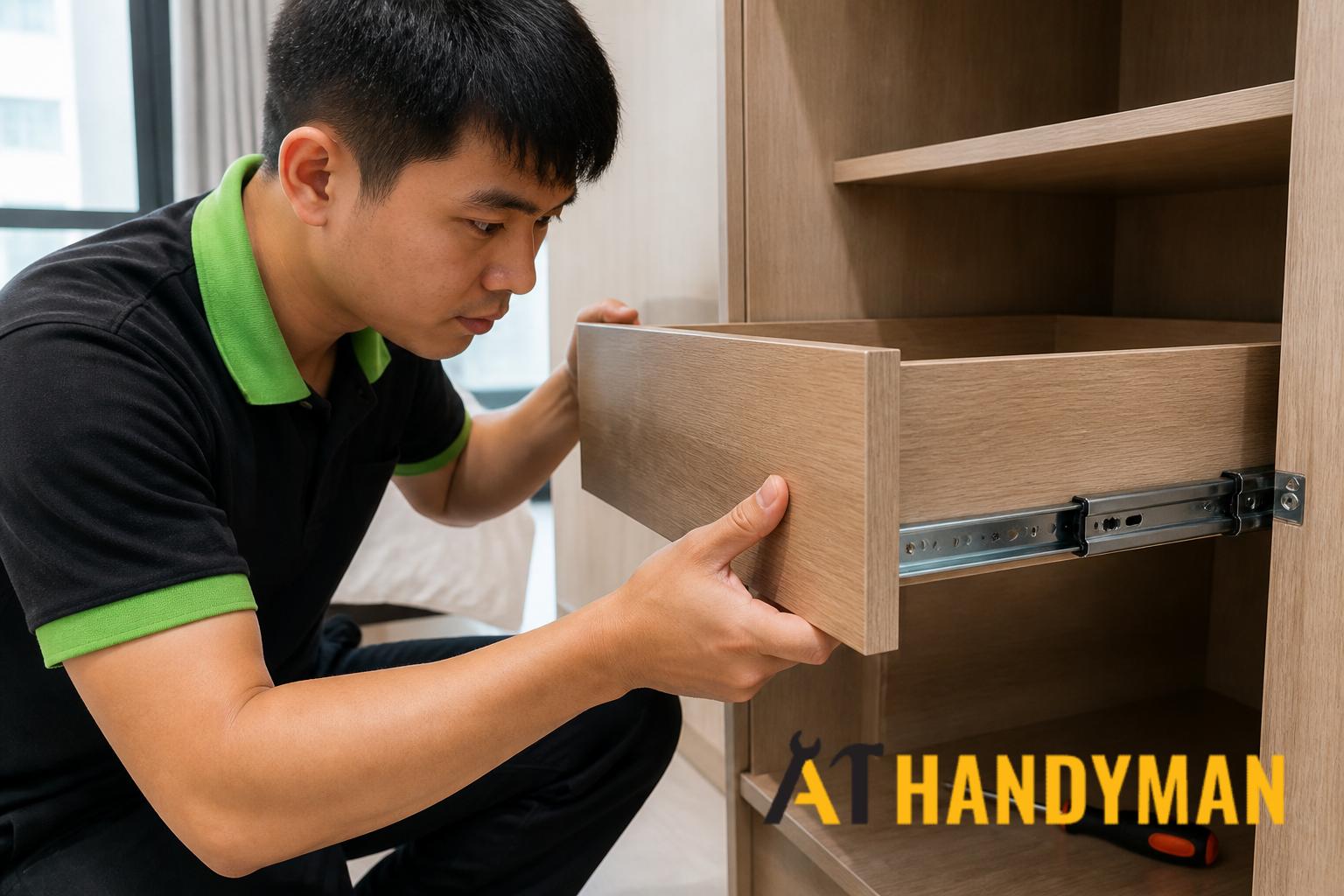
One of the most common carpentry repair requests is for cabinet doors and drawers. Hinges can loosen over time, causing doors to hang unevenly or rub against neighbouring panels. Drawer runners may also become stiff, noisy or detached, making the drawer difficult to open and close properly.

A carpentry handyman can often handle small hinge adjustments, runner replacement, re-screwing loose fixing points and minor alignment work. If the cabinet carcass is still sound, these repairs may be enough to bring the item back into normal use. However, if the wood is badly swollen, rotten or cracked in the load-bearing areas, the repair may be more limited or may require more extensive carpentry work.

For Singapore kitchens and bathrooms, it is also important to check whether the issue is caused by moisture exposure. If the underlying surface is damaged by water, the handyman may be able to repair the visible fault, but the long-term suitability of the cabinet will depend on how much of the structure has been affected.

Shelves, brackets and small built-in supports

Small repair jobs often include shelves that have dropped, warped slightly or become unstable. This can happen in wardrobes, storerooms, kitchen cabinets or study areas where the support points have loosened. A carpentry handyman may re-secure the shelf, replace damaged supports or adjust the position so it sits properly again.

Built-in supports, divider panels and small internal frames can also loosen with regular use. These components may not look dramatic, but they affect how well the furniture works. A practical repair can reduce wobble, prevent further damage and improve the overall finish of the fixture.

If a shelf is holding heavy items, the handyman will usually assess whether the existing board and fixing points are still suitable for the task. When the problem is beyond a simple re-fixing job, replacement of the shelf board or support system may be the more suitable option.

Minor door and frame-related carpentry issues

While door hardware is a distinct trade area, some small carpentry jobs are linked to the timber parts of doors and frames. These can include small edge repairs, patching minor damage around the frame, re-fixing loose timber sections or improving the fit where the woodwork itself is causing the door to catch.

In many Singapore properties, doors may show signs of wear around the hinge side, latch area or bottom edge. A carpentry handyman can sometimes help with localised wood repairs, such as filling small damaged areas or making minor adjustments to the timber so the door functions better.

It is important to distinguish between a carpentry issue and a lock, hinge or door accessory issue. If the concern is mainly about a lockset, latch or other hardware, a locksmith or door specialist may be more suitable. If the timber itself is damaged, a carpentry repair is more relevant.

Surface damage, chips and small finish repairs

Not every carpentry repair involves a major structural problem. Many jobs are cosmetic but still worthwhile, especially in visible areas such as living rooms, bedrooms and office reception spaces. Small chips, scratches, peeling laminate, exposed edges and dents can make built-in furniture look older than it really is.

A handyman may be able to handle small patching or tidying work, depending on the material and condition of the item. This may include repairing minor damage to the surface edge, improving the appearance of a worn section or preparing the area for a neater finish. The result depends on the original material, the extent of the damage and how visible the repair area is.

For homeowners preparing a property for sale, rental or handover, these small touch-ups can help improve presentation without the cost and disruption of replacing whole cabinets or partitions.

Loose fittings, cracked panels and small structural adjustments

Some small repair jobs involve fittings that are no longer secure. This might include loose screws, detached backing boards, small cracks in timber panels or slight movement in a built-in unit. A carpentry handyman can often re-fix, strengthen or patch these areas if the problem is localised and the surrounding structure remains usable.

Small structural adjustments can also be useful when a fixture is slightly out of alignment but not fully damaged. For example, a cabinet that no longer sits flush, a wardrobe panel that has shifted or a partition detail that has opened at a join may all need targeted repair rather than replacement.

That said, a handyman should only carry out work that is suitable for the condition of the item. If there are signs of significant rot, water damage, repeated collapse or movement in a larger built-in installation, a more thorough inspection is sensible before any repair is attempted.

What to prepare before booking a carpentry handyman

To make the repair process smoother, it helps to gather a few simple details before arranging a visit. Clear photos of the damaged item, a short description of the problem and the property type — whether HDB, condominium, landed home or office — will help the handyman understand the likely scope of the job.

Approximate measurements can also be useful when the repair involves shelves, cabinet doors, panels or a section that may need replacing. If the issue is inside a built-in unit, it helps to note whether the area is accessible and whether anything nearby needs to be moved before work starts.

Because carpentry repairs can vary widely in complexity, a quotation based on the actual condition and scope is more reliable than a general assumption. This is especially important where the problem could involve more than one trade, such as plumbing leak damage affecting timber, or hardware issues affecting a cabinet door.

WhatsApp A1 Handyman Singapore to enquire about your carpentry handyman repair, and share photos of the fixture, the working area, the property type and any approximate measurements so the job scope can be assessed accurately for a quotation.

Conclusion

Small carpentry repair jobs in Singapore often cover the practical fixes that keep cabinets, shelves, drawers, wardrobes and other built-in fittings usable and presentable. For minor wear and tear, a carpentry handyman can often help with tightening, re-fixing, alignment, patching and other targeted repairs, provided the job is suitable for the item’s condition.

When the damage is more extensive, or when the problem is actually related to another trade, the right approach is to identify the real cause first and choose the most suitable repair path. That is the best way to protect both the fixture and the overall finish of the space.

Choose A1 Handyman Singapore

A1 Handyman Singapore provides exceptional support when it comes to tackling home maintenance problems. With reasonable and affordable prices, you can get quality handyman workmanship. We offer a wide range of professional services like plumbing, electrical, aircon servicing, rubbish chute services, water heater services, door repair services, handyman drilling services, wall mounting installation services, TV bracket installation services, and pull up bar installation. Need help figuring out a specific issue? Read through our handyman articles and browse our past handyman projects. Over the years, we have served many satisfied customers and received positive reviews both on Google and Facebook. WhatsApp us at +65 8241 0032 for transparent quotation and honest pricing for all your handyman needs. We offer a fast and efficient service to serve any of your handyman needs!

Frequently Asked Questions

Can a carpentry handyman repair loose cabinet doors and drawers?

Yes, minor issues such as loose hinges, misaligned doors, stiff drawers and detached runners are common carpentry repair jobs. The handyman can usually assess whether the problem can be fixed by adjustment, re-fixing or replacement of small parts, provided the cabinet structure is still in reasonable condition.

Can small carpentry repairs be done for HDB, condo and office spaces?

Yes, small carpentry repairs are often suitable for HDB flats, condominiums, landed homes and office settings. The exact method depends on the fixture type, the material used and how accessible the damaged area is. Built-in cabinetry, shelving and simple timber fittings are common examples.

When is repair better than replacing the whole carpentry item?

Repair is often more suitable when the damage is localised, such as a loose hinge, chipped edge or small panel problem. Replacement becomes more likely when the item has widespread moisture damage, major structural failure or repeated issues that affect its overall stability and function.

data-point-installation-a1-handyman-singapore-3

How Is Electrical Handyman Work in Singapore Tested After the Repair Is Completed?

After an electrical repair is completed in Singapore, the most important question is whether the repaired point works properly, safely and consistently before the job is considered finished. For electrical handyman work, testing is not just a quick switch-on. It is a practical check of the repaired fitting, the connected circuit, the surrounding accessories and any visible signs of abnormal operation. This helps to confirm that the fault has been addressed and that the repaired item is ready for normal use.

In homes, flats and offices, electrical repairs may involve sockets, switches, lighting points, ceiling fans, isolator switches or other fittings within the handyman scope. The exact testing approach depends on the item repaired, the condition of the surrounding wiring and whether the fault was intermittent, visible or performance-related. Good post-repair testing focuses on the repaired point itself and on safe operation in the actual environment where it will be used.

What post-repair testing is meant to confirm

Once an electrical repair is done, the main aim of testing is to check whether the repaired item now performs the function it was intended to do. For example, a switch should control the light reliably, a socket should deliver power to a plugged-in appliance, and a repaired fixture should not show obvious signs of loose contact, unusual noise or inconsistent operation.

Testing also helps identify whether the original issue has truly been resolved or whether there is a deeper problem elsewhere in the circuit, accessory or fitting. In Singapore homes, some electrical symptoms are localised to one point, while others may be related to a broader circuit issue. A sensible post-repair check helps separate a successful repair from one that still needs further attention.

It is also important to verify that the repaired item is suitable for daily use in the room or area where it is installed. A repair that appears fine at first glance may still need closer checking if the fitting is old, the surrounding faceplate is worn, or the appliance load is not suitable for the outlet being used.

Common checks carried out after an electrical repair

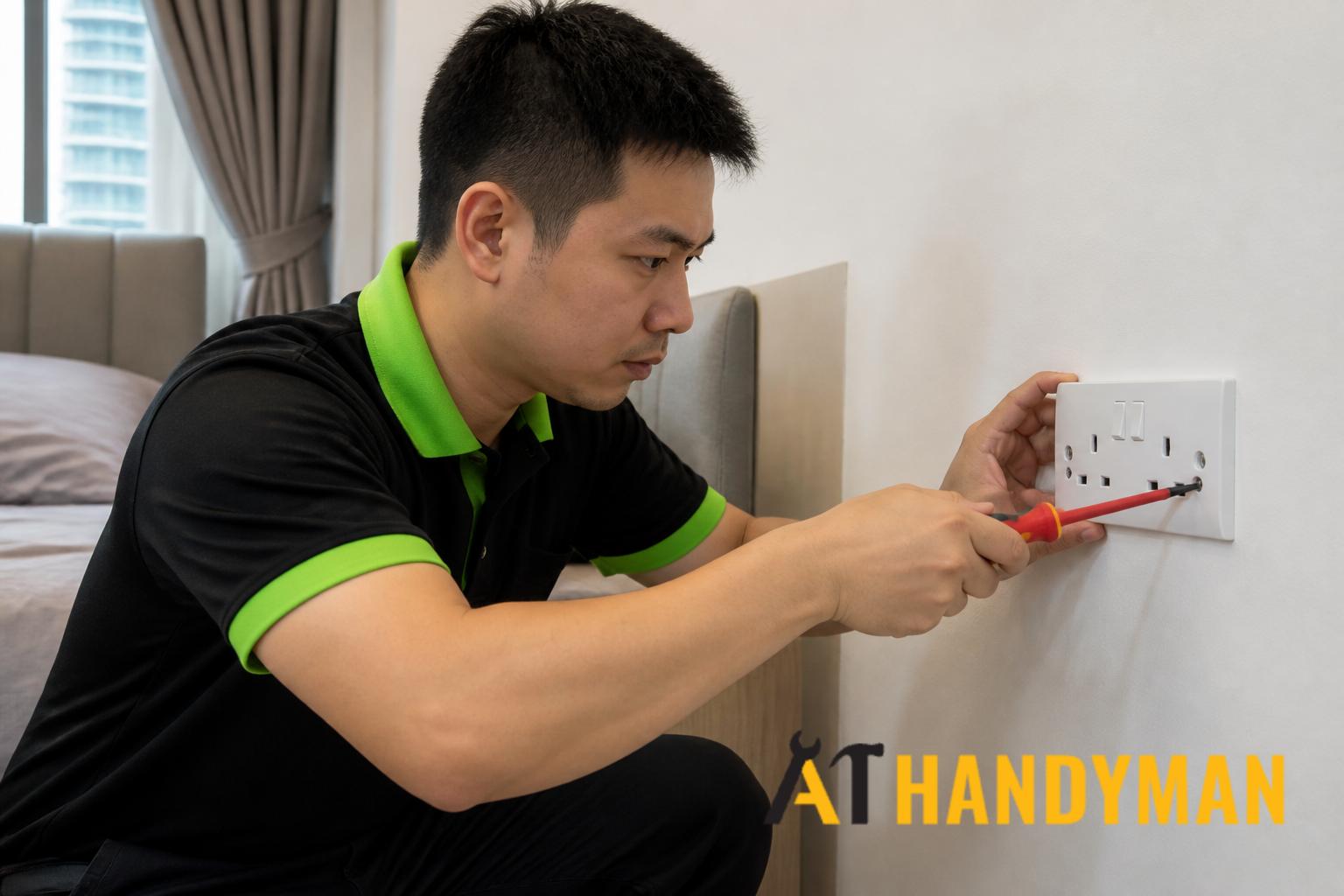
The first and most basic check is usually a functional test. This means switching the item on and off, plugging in a suitable appliance, or activating the repaired fitting to confirm that it responds normally. If the repair involved a light point, the lamp should illuminate steadily. If it involved a socket, the connected device should power up as expected.

A careful test also looks at the physical condition of the repaired area. The handyman or technician will typically observe whether the fitting feels secure, whether the faceplate sits properly, and whether there are any obvious signs of movement, looseness or heat-related damage. These visible checks matter because electrical problems are not always only about whether the item turns on.

Where relevant, the repair may also be checked for consistency over a short period of use. An intermittent fault can sometimes appear to be fixed when first tested, then return if there is a loose internal connection, an ageing component or a contact issue that only shows under use. That is why electrical testing after repair should be practical rather than purely visual.

Why the type of electrical item affects the test method

Different electrical items need different post-repair checks. A repaired light switch is tested differently from a power socket, and a ceiling light fitting is not assessed in the same way as a fan point or an electrical control switch. The testing process should match the actual repair carried out.

For lighting-related repairs, the key concern is whether the light operates properly without flickering, delay or irregular behaviour. For socket repairs, the focus is on whether the outlet is delivering a stable connection and whether the plug fits and functions properly. For fixtures with moving parts or controls, the repaired item should be checked through several operating cycles to make sure it responds in a predictable way.

In Singapore apartments and houses, older fittings may also need a more cautious check because wear and ageing can affect how securely parts sit in place. A repair may solve the immediate fault, but the surrounding condition of the fitting can still influence how reliable it is in everyday use.

Safety considerations during and after testing

Electrical testing should always be done with caution, especially when the repair involved exposed components, loose connections or ageing fittings. The repaired item must be checked in a way that avoids unnecessary contact with live parts or improvised DIY methods. For most homeowners and tenants, it is safer to let a qualified person handle the repair and the post-repair testing.

After the repair, it is sensible to watch for warning signs such as repeated tripping, buzzing sounds, warmth around the fitting, a burning smell, or a switch that feels abnormal during use. These are not conditions to ignore. If any of these appear after the repair, the item should be stopped from further use and rechecked by a suitable electrical professional.

It is also important not to assume that every electrical issue can be safely judged by appearance alone. Some problems are internal and may not be obvious from the outside. That is why proper testing after repair should be seen as part of the work, not an optional extra.

What homeowners and tenants can do before the repair is tested

Before the repaired item is tested, it helps to provide clear information about the original fault. For example, note whether the issue was constant or intermittent, whether it happened after a power interruption, or whether it affected one point or several points. This gives the handyman a better basis for checking the right area after the repair.

It is also useful to make the area accessible. Clear small items away from sockets, switches, light fixtures or the surrounding wall so the repaired point can be examined properly. In condominiums, landed homes and offices, easy access can make the post-repair check much more straightforward.

If the repair is in a shared-use area or an occupied room, it is wise to let the person carrying out the work know how the item is normally used. That context can matter when checking whether the repaired electrical point is truly performing as expected in real conditions.

When a follow-up check may still be needed

Sometimes an electrical repair appears satisfactory at first but later shows signs that another issue remains. This can happen with older installations, repeated faults, or fixtures that have suffered wear over time. In such cases, the first test may confirm that the obvious problem has improved, but a follow-up inspection may still be necessary if the symptom returns.

If a repaired point is still inconsistent, it may not be enough to simply reset or retry it repeatedly. Further checking may be needed to understand whether the issue lies in the fitting, the wiring, the connected device or another part of the circuit. That is especially relevant in Singapore properties where multiple electrical points may share the same usage pattern over time.

For this reason, post-repair testing is best treated as a confirmation step, not a guarantee that an ageing electrical system will never need further work. It is a practical way to confirm the immediate repair and identify whether the installation is behaving normally under everyday use.

If you want help with electrical handyman work in Singapore, WhatsApp A1 Handyman Singapore with photos of the fixture and working area, your property type, approximate measurements if relevant, and the exact repair scope so a quotation can be based on the actual job.

Conclusion

Testing electrical handyman work after a repair is completed is an essential part of confirming that the fixed point works correctly, sits securely and behaves safely in normal use. The exact checks depend on the item repaired, but the general aim is always the same: to make sure the fault has been properly addressed before the job is considered complete. For Singapore homes and offices, careful post-repair testing provides practical reassurance and helps identify whether any further electrical attention may be needed.

Choose A1 Handyman Singapore

A1 Handyman Singapore provides outstanding handyman services in Singapore. We offer plumbing, electrical, aircon servicing, rubbish chute services, water heater services, door repair services, and provide drilling services for wall mounting installations, TV bracket installation services, and pull up bar installation. Need help figuring out a specific issue? Read through our handyman articles and browse our past handyman projects. For reliable handyman services, contact us now through WhatsApp at +65 8241 0032!

Frequently Asked Questions

How is a repaired electrical socket usually checked?

A repaired socket is normally checked by confirming that power is delivered properly to a suitable device, that the plug fits securely, and that the outlet shows no obvious signs of looseness, heat or unusual sound during use. If the socket was previously intermittent, it may also be monitored briefly to see whether the connection remains stable.

Can a light switch be tested just by turning it on once?

Turning it on once is a basic check, but it may not be enough on its own. A proper post-repair test usually includes several on-off actions to confirm that the switch responds consistently and that the connected light operates normally without flicker or delay.

What should I do if the same electrical problem returns after repair?

If the same issue returns, stop using the affected point and arrange for it to be checked again. Repeated faults can suggest a deeper problem in the fitting, wiring or connected equipment, so it should be reviewed by a suitable electrical professional rather than treated as a minor nuisance.

Which Electrical Jobs Can a Handyman Handle in Singapore and Which Need a Licensed Electrician? by A1 Handyman Singapore

Which Electrical Jobs Can a Handyman Handle in Singapore and Which Need a Licensed Electrician?

In Singapore, electrical work sits in a grey area for many homeowners and tenants: some minor tasks may be manageable for a handyman, while others should be handled by a licensed electrician. The key is to separate simple, low-risk tasks from work that involves rewiring, circuit changes, safety devices or anything that affects the electrical system as a whole.

If you are planning maintenance, installation or a small repair at home or in an office, it helps to know what a handyman can reasonably assist with and where a licensed electrician is the safer and more suitable choice. This guide explains the difference in practical terms for Singapore properties, including HDB flats, condominiums, landed homes and commercial spaces.

What a handyman can usually handle for basic electrical-related jobs

A handyman may be suitable for straightforward, non-invasive tasks that do not require altering the wiring inside walls, distribution boards or protected electrical circuits. This can include replacing simple light fittings where the task is limited and the existing wiring condition is already suitable, or helping with fixture-related work that supports an electrical item rather than modifying the electrical system itself.

In practical terms, handyman support is often considered for minor jobs such as changing a lamp holder, securing a loose socket faceplate, or assisting with the physical installation of a plug-in appliance or light fitting when no rewiring is involved. Even then, the exact scope matters: if the job requires circuit isolation, cable extension or changes to the existing electrical points, it should move to a licensed electrician.

For Singapore homes, especially older units, the age and condition of the existing wiring can change what is appropriate. A handyman may identify a visible issue and help with non-electrical parts of the task, but anything that suggests damaged insulation, overheating, tripping or inconsistent power should not be treated as a simple handyman job.

Jobs that should be left to a licensed electrician

Any job involving wiring changes, new circuits, distribution boards, breaker issues, concealed cabling or load-related concerns should be done by a licensed electrician. This includes installing new electrical points, moving sockets, rewiring sections of a room, changing the consumer unit, and troubleshooting repeated electrical faults.

Safety-critical work is another clear boundary. If the task involves earthing, circuit protection, protective devices, electrical testing or fault diagnosis beyond a visible fitting, a licensed professional is the right person. The same applies when a problem affects multiple points, causes frequent tripping, or suggests an issue inside the wall or ceiling.

In Singapore, this distinction is especially important in shared buildings and managed estates, where electrical work can affect building systems, common expectations and maintenance procedures. When in doubt, a licensed electrician is usually the correct choice for anything beyond a basic fixture replacement.

Common examples of handyman-suitable versus electrician-only tasks

Examples help make the difference clearer. A handyman may be able to help replace a light shade, install a plug-in lamp, fasten a loose cover plate, or mount a small fixture that simply connects to an existing point without rewiring. These are physical installation tasks, not electrical alterations.

By contrast, a licensed electrician should handle the installation of new ceiling light wiring, adding additional power points, relocating switches, repairing a circuit fault, or dealing with sparking, burning smells or repeated power loss. These situations involve electrical integrity rather than simple installation work.

If a job appears simple but needs access to hidden wiring or changes to the existing electrical layout, it has moved beyond handyman scope. A good rule is this: if the task changes how electricity is distributed or protected in the property, it belongs to a licensed electrician.

How property type affects the decision in Singapore

In HDB flats, the electrical setup is often compact and may include older points, upgraded fittings or mixed-condition fixtures. This makes it important to distinguish between cosmetic or fixture-related work and proper electrical work. A handyman may assist with accessible, non-invasive tasks, but anything involving the wiring itself should be assessed by a licensed electrician.

In condominiums, there may be building rules, management procedures or access considerations that affect how electrical work is carried out. For landlords and tenants, it is also important to agree on whether the task is a minor fixture replacement or a formal electrical repair, as this affects who should be engaged.

For landed homes and offices, the range of electrical issues can be broader. Additional circuits, external lighting, heavier usage patterns and equipment-related requirements often mean the job needs proper electrical assessment. A handyman may still help with selected support tasks, but the electrical side should be handled by a qualified person where necessary.

Signs that the job is no longer suitable for a handyman

Some issues should immediately raise caution. If a socket feels warm, a switch is discoloured, a breaker keeps tripping, there is a burning smell, or a fitting produces buzzing or flickering that suggests an electrical fault, it should not be treated as routine handyman work. These are signs that the problem may be inside the electrical system.

Likewise, if a job requires opening up concealed wiring, extending cables, connecting to the main supply or carrying out testing to find the cause of a fault, a licensed electrician is the more appropriate professional. A handyman can help with visible components, but not with diagnosing or altering the electrical network itself.

Homeowners sometimes ask whether a “small” electrical task can be handled informally. The safer answer is to focus on what the task actually involves, not how simple it looks from the outside. If there is any uncertainty about wiring, circuit protection or electrical safety, use a licensed electrician.

Preparing for an electrical job in your home or office

Before arranging any electrical-related work, it helps to note exactly what needs attention: the fixture type, where it is located, whether it is a replacement or a first-time installation, and whether the issue is cosmetic, mechanical or electrical. Photos of the existing setup are often useful when asking for an assessment.

For property owners and tenants, it is also wise to confirm whether the job is in a private unit, a shared area or a workplace. This can affect access, permissions and the type of professional needed. If the work seems to involve wiring changes, testing or anything safety-related, make that clear from the start so the right person can be assigned.

For a simple handyman job, preparation may include clearing access to the fitting, removing items around the work area and checking the existing fixture condition. For a licensed electrician, preparation should focus on describing the fault accurately and keeping the area accessible for inspection and safe work.

If you are unsure whether your electrical job is suitable for a handyman or needs a licensed electrician, WhatsApp A1 Handyman Singapore with photos of the fixture and working area, your property type, any approximate measurements if relevant, and the exact job you need assessed for a quotation based on the actual scope.

Conclusion

In Singapore, the best way to decide between a handyman and a licensed electrician is to look at the nature of the task. Visible fixture replacement and simple support work may suit a handyman, but anything involving wiring, circuits, testing, fault diagnosis or electrical safety should be left to a licensed electrician. Choosing the right person helps keep the job suitable, practical and safer for your property.

Choose A1 Handyman Singapore

A1 Handyman Singapore provides exceptional support when it comes to tackling home maintenance problems. With reasonable and affordable prices, you can get quality handyman workmanship. We offer a wide range of professional services like plumbing, electrical, aircon servicing, rubbish chute services, water heater services, door repair services, handyman drilling services, wall mounting installation services, TV bracket installation services, and pull up bar installation. Need help figuring out a specific issue? Read through our handyman articles and browse our past handyman projects. Over the years, we have served many satisfied customers and received positive reviews both on Google and Facebook. WhatsApp us at +65 8241 0032 for transparent quotation and honest pricing for all your handyman needs. We offer a fast and efficient service to serve any of your handyman needs!

Frequently Asked Questions

Can a handyman replace a light fitting in Singapore?

Sometimes, yes, if it is a straightforward replacement and does not require rewiring or changes to the electrical circuit. If the job involves new wiring, concealed connections or any uncertainty about the existing setup, a licensed electrician is the better choice.

Who should install a new power point or socket?

A new power point usually involves electrical wiring work and should be handled by a licensed electrician. This is not the same as replacing a visible cover plate or carrying out a purely cosmetic fixture change.

What should I do if a socket is sparking or a breaker keeps tripping?

These are signs of a potential electrical fault and should be assessed by a licensed electrician rather than treated as a handyman job. Avoid assuming it is a minor issue, because the cause may be within the wiring or circuit protection.

ceiling-fan-relocation-electrical-service-a1-handyman-singapore-condo-bedok-2

How Does an Electrical Handyman in Singapore Diagnose a Household Fault Before Repair Work?

Before any repair begins, a good electrical handyman in Singapore will first work out what is actually wrong, where the fault may be coming from, and whether the issue is safe to inspect on site. For household electrical problems, diagnosis matters just as much as the repair itself, because symptoms such as tripping, dead sockets, flickering lights or a non-working fan can all point to different causes. A careful approach helps avoid unnecessary replacement work and supports a safer, more suitable fix for the home.

Start with the symptom, not the assumption

The first step is usually to listen carefully to the homeowner’s description of the fault. An experienced electrical handyman will ask what stopped working, when it started, whether the issue is constant or intermittent, and whether it affects one point or several parts of the home. These details help narrow the problem before any tools are used.

For example, a light that does not switch on may involve the lamp holder, switch, wiring point or the circuit supplying that room. A socket that has stopped working could be isolated to one outlet, or it may be part of a wider circuit issue. The job of diagnosis is to separate the visible symptom from the likely electrical cause.

Check the affected area and the pattern of the fault

Once the symptom is clear, the handyman will usually inspect the specific location and look for patterns. In Singapore homes, faults may appear in a single bedroom, along one section of the living room lighting, or across multiple outlets in the same zone. The pattern often gives useful clues about whether the issue is localised or circuit-wide.

They may check if other appliances on the same circuit are functioning, whether the fault changes when switches are used, and whether the issue happens only under load. This sort of pattern recognition is important because it helps avoid replacing parts that are not actually the source of the problem.

Identify visible signs of wear, damage or loose connections

A practical inspection often includes looking for obvious signs such as heat marks, discolouration, loose fittings, cracked faceplates, worn switches or dangling components. In some cases, a household fault is linked to a poor connection, a damaged accessory, or a fitting that has deteriorated with age and regular use.

Electrical handymen also pay attention to whether the fixture appears physically stressed, especially in busy areas like kitchens, service yards, corridors and bedrooms with frequent use. While not every fault is visible, a careful visual check can quickly rule in or rule out common causes before repair work is discussed.

Test the circuit safely before recommending repair work

After the initial inspection, the handyman may carry out basic diagnostic checks using suitable testing methods. The aim is to confirm whether power is present where it should be, whether the fault is isolated to one fitting, and whether the problem is likely to be in the accessory, the wiring point or the connected circuit. Safe testing is especially important when the symptom involves sparking, repeated tripping or a complete loss of power.

Because electrical work carries risk, diagnosis should be done with proper care and appropriate tools rather than guesswork. The handyman should not simply change a part and hope the issue disappears. Instead, the findings from testing should guide the repair scope so the work is relevant to the actual fault.

Consider the type of fitting and how it has been used

The exact fixture involved also affects diagnosis. A faulty ceiling light, wall switch, power socket, fan point or appliance connection each involves different components and different likely failure points. Even when two symptoms look similar, the underlying issue may not be the same.

Usage matters too. A socket that regularly powers heavier household appliances may show wear differently from one used occasionally. A bathroom fitting or kitchen point may also need a more cautious check because of the surrounding environment and exposure to moisture or heat. A good electrical handyman will take these practical conditions into account before recommending any repair.

Separate the electrical issue from the appliance issue

Not every power-related complaint is caused by the home wiring. Sometimes the problem lies with the appliance, plug, flexible cord, bulb, fan unit or other device being used. Proper diagnosis helps distinguish whether the fault belongs to the fixed electrical point or to the item plugged into it.

This distinction matters because the repair approach changes completely. Replacing a wall socket will not solve a defective appliance, and changing an appliance will not fix a wiring fault. A clear diagnosis saves time and supports a more suitable next step for the homeowner or tenant.

Explain findings clearly before any repair begins

After inspection and testing, the handyman should explain the likely cause in straightforward terms and outline what repair work is actually needed. In a Singapore household, this might mean tightening or replacing a faulty accessory, correcting a loose connection, or recommending a more suitable follow-up if the issue appears beyond a simple repair.

Clear explanation is part of proper service. It allows the customer to understand the scope of work, the affected fixture, and why a specific repair is being suggested. For homeowners, landlords and tenants alike, that transparency helps with planning and avoids unnecessary work on unrelated parts of the home.

If you need an electrical handyman in Singapore to assess a household fault before repair work, WhatsApp A1 Handyman Singapore with photos of the fixture and working area, your property type, and any approximate measurements or notes so the job scope can be reviewed properly.

Conclusion

An electrical handyman in Singapore diagnoses a household fault by starting with the symptom, checking the affected area, looking for visible signs of damage, testing the circuit carefully, and separating appliance issues from fixed electrical problems. This measured approach helps ensure the repair work matches the real fault and is suitable for the home’s condition.

Choose A1 Handyman Singapore

A1 Handyman Singapore provides outstanding handyman services in Singapore. We offer plumbing, electrical, aircon servicing, rubbish chute services, water heater services, door repair services, and provide drilling services for wall mounting installations, TV bracket installation services, and pull up bar installation. Need help figuring out a specific issue? Read through our handyman articles and browse our past handyman projects. For reliable handyman services, contact us now through WhatsApp at +65 8241 0032!

Frequently Asked Questions

What should I tell the electrical handyman before inspection?

Share what is not working, when it started, whether the problem is constant or occasional, and whether it affects one point or several. Photos of the fixture and the surrounding area can also help the handyman understand the likely scope before arriving.

Can a tripping circuit be diagnosed without replacing parts immediately?

Yes, it usually should be diagnosed first. Tripping can come from several possible causes, so checking the pattern of the fault and testing the circuit is more sensible than replacing components at random. Proper diagnosis helps identify the most relevant repair.

Is it useful to mention whether the issue is in a HDB, condo or landed home?

Yes, because the property type helps the handyman understand the likely installation context and access conditions. Even when the fault is similar, the layout and fixture arrangement can affect how the diagnosis and repair are approached.

What Should Be Included in a Cheap Handyman Service Quote in Singapore? by A1 Handyman Singapore

What Should Be Included in a Cheap Handyman Service Quote in Singapore?

If you are comparing a cheap handyman service quote in Singapore, the headline number is only part of the picture. A proper quotation should tell you what work is included, what materials are covered, what is excluded, and whether the scope suits your property type, whether that is an HDB flat, condominium, landed home or office unit. For simple repair or installation tasks, a clear quote helps you avoid unexpected extras and makes it easier to compare handyman services fairly.

Start with a clear description of the job

A useful quote should begin with the exact task requested, such as fixing a loose fixture, replacing a part, assembling furniture, drilling holes, mounting a TV bracket, repairing a door, installing a curtain rod, or carrying out a small plumbing or electrical job. The wording matters because different handyman jobs involve different tools, materials, access issues and time requirements.

In Singapore, a cheap quote should still identify the service properly rather than grouping everything into a vague “handyman work” line. If the job involves a specific fixture, the quotation should mention the item, the location in the home or office, and the type of work to be done. That makes it easier for you to check whether the service matches your actual needs.

What labour is covered

One of the most important parts of any quote is the labour scope. This should state whether the price covers only the basic task, or whether it also includes assessment, minor adjustments, dismantling, refitting, cleanup and testing. For example, a simple installation may need drilling, alignment and securing, while a repair may require removal of the damaged part before replacement.

A cheap handyman service quote should also make clear whether the labour rate is for one item, one location, or one visit. If there are multiple fixtures, such as several curtain rods, more than one shelf, or multiple door fittings, the quote should explain how each item is counted. This avoids confusion later if the job turns out to be larger than first described.

Materials, parts and consumables

A quotation should say whether materials and small consumables are included. This may cover basic screws, wall plugs, sealants, adhesive, brackets, or minor replacement parts depending on the task. If the handyman is supplying parts, the quote should state that clearly so you know whether the service is truly comprehensive or only for labour.

For some jobs, especially plumbing, electrical, carpentry repair and door hardware work, the exact part needed may only be confirmed after inspection. In that case, a cheap quote should still explain that material costs may change if the required item differs from the initial description. A fair quote does not need to promise a final amount before the job is properly understood.

Site conditions and access details

A quote for handyman services in Singapore should take into account practical site conditions. Access to the work area, ceiling height, wall material, tight corners, existing fixture condition and the need to move furniture can all affect the scope. A simple item may become more involved if the surface is uneven, the fitting is hidden, or the old fixture is stuck in place.

If the property is a condo, landed home or office, the quotation should reflect any known access restrictions such as lift access, loading needs, parking limitations or building rules that affect entry and work scheduling. A cheap handyman quote is most helpful when it reflects the actual job environment rather than a generic estimate based only on the item name.

Clarify exclusions and extra charges

Every good quote should say what is not included. This is especially important when comparing cheap handyman services in Singapore, because a low starting price can look attractive but exclude common essentials such as dismantling, patching, disposal, extra fittings, transport for special parts, or return visits. If exclusions are hidden, the final cost may be higher than expected.

Look for a clear explanation of possible additional charges. These are not automatically a sign of a poor quote; they are useful when they are stated in advance. The key is transparency. If the handyman service may need to revisit after materials are obtained, or if a more complex repair is found on site, the quotation should explain how such changes are handled.

Check whether the quote matches the type of handyman work

Different handyman jobs need different levels of detail. For drilling, wall mounting and curtain installation, the quote should consider surface type, bracket type and fixture quantity. For door repair or lock-related work, it should identify the door condition, hardware involved and whether replacement parts are needed. For furniture assembly, it should state whether the job is for flat-pack assembly only or also includes securing the item in place.

If the job is plumbing or electrical in nature, the quotation should be especially careful and should not oversimplify the task. Some issues may require a more suitable qualified trade depending on the exact work involved. A responsible quote will focus on the stated task and avoid making assumptions before the fixture or fault has been reviewed.

Ask for a quotation based on actual job scope

A cheap handyman service quote in Singapore is most useful when it is based on the real scope of work, not just a rough description. Sending photos of the fixture, the working area, the property type and approximate measurements, where relevant, can help the service provider understand the job more accurately. That is particularly useful for installation, repair and replacement work where the final scope may depend on the existing condition.

When comparing quotes, focus on clarity rather than just the lowest figure. A well-written quotation helps you see what is included, what may change, and whether the handyman service is suitable for your home or office needs. That is often the best way to compare cheap handyman services in Singapore without losing sight of workmanship scope and practicality.

If you would like to compare a handyman service quote for your exact repair or installation job, WhatsApp A1 Handyman Singapore with photos of the fixture and working area, your property type, and any approximate measurements so the quotation can be based on the actual scope of work.

Conclusion

A cheap handyman service quote in Singapore should be clear, specific and practical. It should describe the exact task, what labour is included, whether materials are covered, any likely exclusions, and any site factors that could affect the job. When a quotation is transparent in these areas, it is much easier to compare services fairly and choose the right handyman for the work needed.

Choose A1 Handyman Singapore

A1 Handyman Singapore provides exceptional support when it comes to tackling home maintenance problems. With reasonable and affordable prices, you can get quality handyman workmanship. We offer a wide range of professional services like plumbing, electrical, aircon servicing, rubbish chute services, water heater services, door repair services, handyman drilling services, wall mounting installation services, TV bracket installation services, and pull up bar installation. Need help figuring out a specific issue? Read through our handyman articles and browse our past handyman projects. Over the years, we have served many satisfied customers and received positive reviews both on Google and Facebook. WhatsApp us at +65 8241 0032 for transparent quotation and honest pricing for all your handyman needs. We offer a fast and efficient service to serve any of your handyman needs!

Frequently Asked Questions

What should I send before asking for a handyman quotation?

Send clear photos of the item or area, a brief description of the work needed, your property type, and any approximate measurements if relevant. This helps the handyman understand whether the quote should cover installation, repair, replacement or assembly, and whether there are site conditions that may affect the scope.

Why do some cheap quotes change after inspection?

Some jobs look simple at first but become more involved once the fixture, wall, pipe, door or fitting is checked properly. A quote may change if the existing condition is different from the initial description, or if extra parts, labour or access work are needed. A transparent quote should explain that possibility in advance.

Should a handyman quote include materials?

It should state clearly whether materials are included or billed separately. For many handyman services, the most useful quotation tells you if the price covers labour only, labour plus consumables, or labour plus replacement parts. That makes it easier to compare quotes and avoid misunderstandings later.

Need Help? Text us now!